Understanding BPD vs. Bipolar: Key Differences Explained

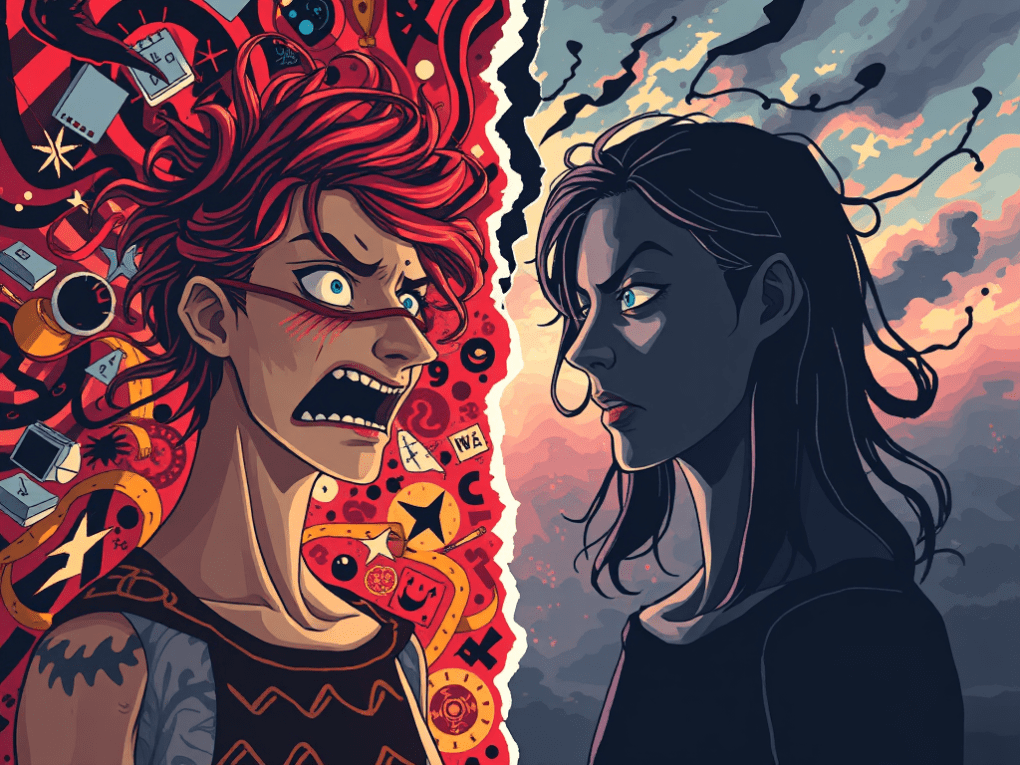
BPD, which stands for Borderline Personality Disorder, has significant areas of overlap with bipolar disorder. Both disorders implicate a breakdown in the emotion regulation areas of the brain. But what are the differences? Cross-sectionally, they’re sometimes quite difficult to tell apart. More differences emerge when looking longitudinally across time.

  1. Bipolar is episodic and predictable in the short term: episodes of mania and depression (and mixed episodes) come and go in a fairly predictable fashion. Some people have depression first and then fly into mania, while others start out with a manic episode and then crash into the depression. It’s roughly 50-50 between these patterns, but within individuals the pattern stays consistent. Which is to say, if you’re a mania first bipolar, you’ll most likely always be mania first.
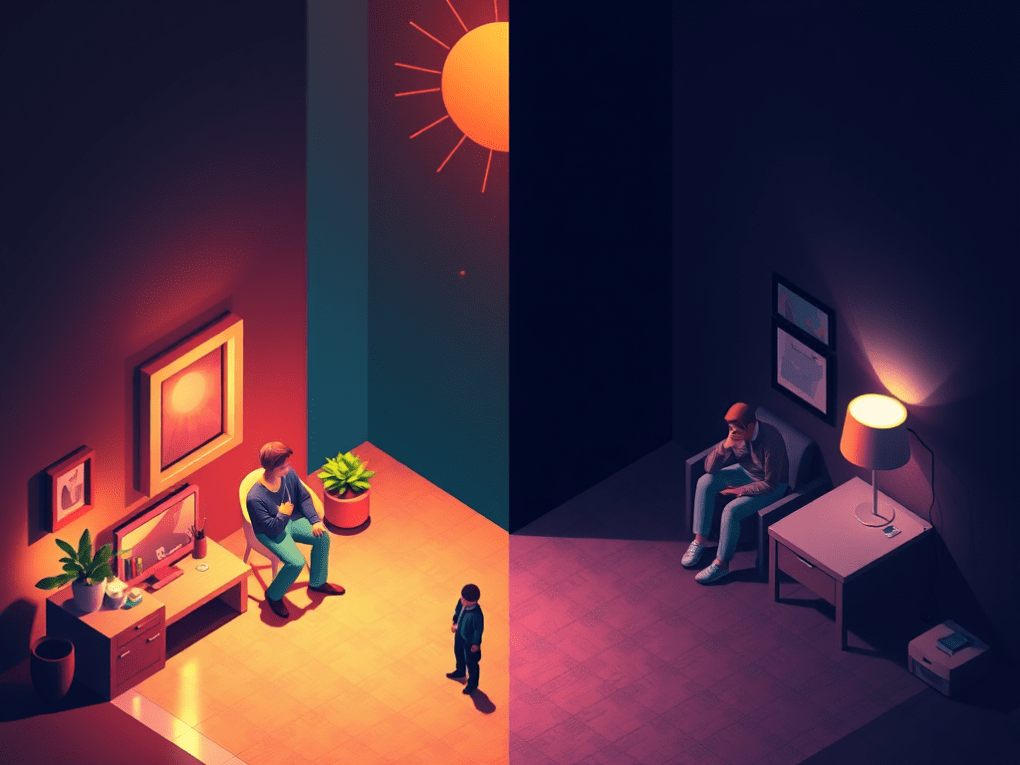
  2. BPD breakdowns tend to be triggered by some situation the person has found themselves in. Their responses may be over-exaggerated but there is some kind of trigger. Bipolar episodes can also be triggered sometimes, but classically, bipolar episodes can occur with no trigger at all. They’re related to a sort of internal thermostat which is broken. Thus, time of year — and changes in sunlight, which affects this internal thermostat — can be triggers for bipolar disorder, and less likely for BPD.
  3. Psychosis is much more pronounced in bipolar disorder than in BPD. The classic euphoric mania with grandiose delusions come to mind; in bipolar disorder, psychosis is limited to mood episodes and is almost always mood-congruent. (Meaning, someone with classic euphoric mania might have grandiose delusions that they are a very important person or have special powers or abilities; meanwhile, someone in a mixed episode might hear muffled voices that make them feel very paranoid about who might be watching, and they see bugs crawling all over the walls. Okay, the mixed episode examples are psychotic features I have experienced myself.) BPD people may experience transient, stress-related psychosis, but they don’t hold onto it as strongly as bipolar people.
  4. Sleep and changes in sleep are arguably the most important symptoms for bipolar people. Not sleeping enough feeds into mania, while sleeping too much feeds into depression. The relationship between BPD and sleep is less clear. Lack of sleep may worsen emotion regulation challenges. People with BPD who don’t get enough sleep are likely to be irritable during the day.

Bipolar Disorder: Egosyntonic or Egodystonic?

The concept of egosyntonicity comes from the days of Freudian analysis, although it is still used among psychologists all over the map of treatment modality. Basically, an egosyntonic syndrome doesn’t come into conflict with the self — whereas an egodystonic condition does create inner conflict and, in doing so, causes significant distress.

Here are some examples:

  • Egodystonic: OCD, depression (usually), anxiety
  • Egosyntonic: Autism, eating disorders, euphoric mania, narcissistic personality disorder

Since bipolar disorder changes over time, for me, it fluctuates between egosyntonicity (in euphoric mania) and egodystonicity (in dysphoric/mixed mania and depression). That said, as I’ve come to have a great deal of insight into my bipolar disorder, it’s actually become increasingly egosyntonic. I’ve accepted the diagnosis that I received at 17 years old.

I mean, I even suspected I was bipolar for quite a few years before my official diagnosis when I went away to … but I had a rebellious phase around 19-20 years old. I was involuntarily hospitalized twice in less than a year, which at the time seemed like a lot. (After my career at UCLA, it doesn’t seem like nearly as much now.)

What about you? Would you say bipolar disorder is moreso egosyntonic or egodystonic?


Bipolar Disorder vs. Manic Depression: Importance of Lived Experience

You may have heard that Bipolar Disorder used to be known as Manic Depression. This was the case until 1980, with the advent of the DSM-III. The committee over at the APA who decides these things had three goals in mind when they changed the name:

  1. Reduce stigma — The APA saw that the term “manic depression” had become highly stigmatizing.
  2. Provide a more accurate and clinical description of the condition
  3. Reflect the alternating periods of mania and depression that characterize the disorder — more on these in a minute.

I want to clarify that while the APA laid out the missions above, they did not consult the community members who live with the condition. Many people, some of them high profile (like Kay Redfield Jamison) still prefer the term manic depression still today. To change the name of a disorder without extensive community feedback feels like a violation of autonomy for those of us who live with a severe mental illness.

But let’s address the three goals laid out by the APA with the publication of the DSM-III…

  1. Although it’s very likely true that the term “manic depression” had become highly stigmatized, it seems a bit odd to assume that the stigmatization of the disorder came from what we choose to call it, rather than stemming from the people who live with the condition. Case in point, today “bipolar” is highly stigmatized and used inappropriately for a number of reasons — to refer to indecisive weather patterns, people we don’t like, and a host of other things. It’s just as bad as manic depression ever was. Why? Well, maybe the problem wasn’t the term manic depression. The stigma was never attached to the term. The stigma is attached to those of us who live with the condition, regardless of what you choose to call it. No matter how many times you change the name of the disorder, that truth would never change.
  2. Many of us in the bipolar disorder/manic depression sphere actually feel that “manic depression” is much more descriptive of our lived experiences. “Bipolar” exemplifies a particular phenotype, one which is at least somewhat common among bipolar folks (and considered by some to be an archetypal presentation) but to the exclusion of others with more uncommon manifestations of the disorder. If we are to take “bipolar disorder” at face value, I am left to assume that there are two “poles” (opposites) which people oscillate between. However, this ignores the very real and unfortunately common experience of mixed episodes — when the two opposing states of “bipolar” are somehow happening both at the same time. How can they be opposite, when in fact they coexist so frequently?
  3. I don’t think most people who know little about “bipolar disorder” are thinking about its longitudinal dynamics. Many people still believe that bipolar disorder is about quick shifts in mood lasting only a few hours (although these types of episodes do happen in classic bipolar disorder, they are much more rare and occur in the context of other well-known symptoms) or that bipolar disorder is the same as “multiple personality disorder”.

As it turns out, I think manic depression is both more accurate (instead of positing that mania and depression are opposing forces, when in reality, they seem to be linked and can even occur simultaneously) and, in the end, probably less stigmatizing than “bipolar disorder”. This just highlights the importance of including community input (for example, from “bipolar” patients) when making decisions like this.

What do you think? Leave a comment and let us know!


The Impact of Bipolar Disorder on Physical Health

Those of us with bipolar disorder can bear a heavy burden when it comes to co-occurring conditions, medication side effects, and we are at higher risk for many diseases. Some of these effects are ameliorated by efforts at early screening and detection. We hope (perhaps naively) to catch tardive dyskinesia before it becomes permanent and Stevens-Johnson Syndrome before it becomes fatal. Likewise, in the US we have a federal registry for clozapine patients that aims to detect agranulocytosis (destruction of white blood cells, which disables the immune system) with rigorous blood testing.

Other medications may take a more nefarious route to affecting our health. Lithium is able to cross membranes and take up residence inside your body’s cells, where it stubbornly resists removal by hemodialysis. Years down the road, it can lead to kidney failure, not to mention destroying your thyroid gland.

But there’s more than meets the eye to the interface of bipolar disorder in medical care.

Bipolar disorder is widely stigmatized by medical professionals

I once presented at the ER for an abscess the size of a tennis ball erupting from my thigh (a consequence of my then-undiagnosed hidradenitis). I showed the triage nurse; she documented it. Then she asked for my phone and my shoes.

“The psychiatrist is going to see you,” an aide informed me.

“What? Why? I have an abscess!”

They didn’t care to listen to me. Two hours later, a psychiatry resident showed up at my bedside. He took a look at my abscess.

“I don’t know why they sent you over here,” he said, sighing. Another two hours passed before a “medical” MD came to take a look and determine (within minutes) that we were going to drain my abscess. It was extremely painful. Surely, anyone would be a touch irritable or agitated in such circumstances. But I’ve been told that having bipolar disorder in my history was good enough reason to detain me, independent of any other facts. You know what that’s called: discrimination. I hadn’t complained of any suicidal planning or expressed a desire to be admitted. In my place, someone without those two words in their file — “bipolar disorder” — would have been seen by a medicine doctor hours earlier.

But, to be fair, it’s not just bipolar disorder that is stigmatized. I was once being detained in the psych area of the ER, when an aide mentioned to another aide that she had PTSD. I was in a fairly good mood, and I joked, “You’re one of us!”

“I’m nothing like you,” she said, frowning coldly. “PTSD is not a mental illness.”

I was taken aback by her confidence and we started to argue when the charge nurse walked in. We both told our side of the story and the charge nurse decided to move the aide to a different part of the ER. She did not look happy, let me tell you.

Bipolar disorder can affect how drugs work in your body

Whether from drug-drug interactions or simply unusual metabolism of certain medications, prescribing medicine for physical health reasons is a tricky business when you have bipolar disorder. The most commonplace medications can be problematic: antibiotics (can cause mania), ibuprofen or most other NSAIDs (interacts with lithium and can raise lithium levels to toxic, resulting in profuse vomiting — try telling that to an overworked nurse who thinks you’re seeking pain meds!), prednisone or other steroids (can cause mania), Sudafed (stimulant — may cause mania)… the list goes on.

This is what I’ve found with alternatives. This only represents my own experience and should not be taken as an endorsement of research in this area (probably because there isn’t much).

Antibiotics: Doxycycline should be avoided, but amoxicillin is okay.
Ibuprofen/NSAIDs: The exception to this rule is old-fashioned aspirin, which is safe if you’re on lithium!
Prednisone/steroids: Unfortunately I haven’t found an effective alternative. You just gotta play the odds. Being manic is better than being dead.
Sudafed: I recommend diphenhydramine (Benadryl) which is effective, safe for bipolar disorder, and cheap.

Having bipolar disorder can increase your odds of having another disease

Some diseases and risk factors for diseases, including metabolic syndrome, obesity, diabetes mellitus (type 2), and diabetes inspidus (if you’re on lithium) appear to clearly be linked to certain medications people might take to treat their bipolar disorder. But others are less clear. Headaches are associated with bipolar disorder, especially migraines and cluster headaches (less commonly chronic tension headaches). Genetic evidence has aligned to connect epilepsy and bipolar disorder (such as the SP4 gene, which was published about in September 2024) and this is concordant with the longstanding clinical observation that bipolar disorder often responds to cocktails including anticonvulsant medications such as Lamictal (lamotrigine), Depakote (valproate), even Topamax (topiramate). Large studies have also shown that people with bipolar disorder are more likely to develop Parkinson’s Disease, independently of cases that are likely drug-induced.

Surprisingly, when COVID-19 first swept the world, some research suggested that people with bipolar disorder were more likely to have a severe or life-threatening COVID-19 disease course even when controlling for factors such as obesity. Taken together with available evidence, this may lend support to the idea that alterations in the body’s inflammatory pathways may be causal to bipolar disorder. It has long been recognized that influenza infection can precipitate manic or psychotic episodes. In January 2018 I had the flu and I became preoccupied with the fact that I (definitely) had AIDS and I began writing long goodbye letters to my friends. Luckily, the flu was better in about 3 days.

Drugs (use, abuse, and misuse) cause problems

As I mentioned, certain medications can have severe side effects…
Neuroleptics (such as Haldol/haloperidol): Neuroleptic Malignant Syndrome, Tardive Dyskinesia, Movement Disorder
Atypical Antipsychotics (such as Zyprexa/olanzapine, Risperdal/risperidone, Abilify/aripiprazole, and clozapine): Agranulocytosis (Clozapine specifically); Akathisia and movement disorder (particularly Abilify and Vraylar)
Anticonvulsants: Stevens-Johnson Syndrome (especially lamotrigine — and keep in mind that risk for SJS increases whenever you start or stop taking the medication suddenly, and if you do this multiple times your risk climbs higher and higher)
Antidepressants and other serotonergic drugs, such as stimulants and street drugs like MDMA: Serotonin Syndrome

Bipolar people are famous for resisting taking medications that could help them, which can make the above side effects more likely. Not taking your meds can also make bipolar disorder worse, and make you more at risk for accidental deaths such as a car crash, while also making you more at risk for intentional death (suicide). Lithium has uniquely shown a capacity to lower the risk of suicide.

Not only that, but it will always be assumed that you are “drug seeking” especially when you try to explain the bit about why you’re too good for the ibuprofen that everyone else takes. But no fear, the nurse has your back and will get you some IV lorazepam (Ativan) while they process your discharge.


Things that I found useful living in the Upper East Side of Manhattan

About six months ago, I moved out of my parents’ home on Long Island. I had been living there since I graduated with my PhD in Psychology. About three years, I think. I was eager to have my own space and spent many hours looking at furniture, most of which I could not afford. My apartment is a studio, though it has two levels and separate bathroom and kitchen areas. It has a certain charm to it. (I did buy one piece of furniture over $150 or so — this dresser, in ivory. I love it, it’s perfect for my space.)

Anyway, this post is about things I found useful while living in NYC. Just as a disclaimer, I will link to the products I bought wherever possible, but I have not been paid off by any of these companies.

1. A small bag

A small backpack or crossbody bag is essential for traveling around in the city. Lately I’ve mostly been using a mini backpack from Timbuk2 that I picked up a few years ago, or a crossbody from Mokuyobi similar to this one. Avoid carrying anything with designer logos. They might make you a target for theft.

    2. ANC headphones

    As an autistic person, I wore these even in the suburbs, but the city is crazy loud. I highly recommend getting a quality pair of headphones with active noise cancelling (ANC) unless you’re in the minority of people for whom ANC causes motion sickness. I wear Bose QuietComforts. Wow, I’m eyeing that blue color!! Mine are just black.

    3. Hiking shoes

    It should go without saying that you need comfortable walking shoes in NYC. In the winter, however, sidewalks can get slippery. You’ll want a shoe with decent traction. Sure, you could wear boots, but most boots are rigid and difficult for me to get my foot into (due to my dyspraxia). But there’s a subgenre of sneakers with high traction: hiking shoes! I got (and love!) the Oboz Emma Low (in Charcoal).

    4. Neutrogena City Shield

    It’s important to keep moisturized, especially in the winter as aging heating systems make the air indoors very dry. It’s also important to protect your skin from the sun year-round. This is a product that does both, and it also contains antioxidants to protect skin from pollution.

    5. Fan

    Of course, having a fan to circulate air in the summer is a no-brainer, but if you don’t have space to air dry your clothing outdoors, you can use a fan to dry them.

    6. Scooter

    I know some people love their e-scooters but I’m talking about a manually powered kick scooter. I have a Micro Flex scooter, but an adult sized Razor will do. You can take it on the subway and you can ride on the sidewalk. Another option is a bicycle (or hybrid electric bicycle), if you’re confident enough to use the bike lane.

    Note that the Micro Flex is discontinued; if you think you might use the 2 year warranty, or you weigh somewhere between 220 and 250 lb, I recommend buying a Micro Suspension directly from Micro.

    7. Long johns

    NYC doesn’t usually get extremely cold, but each year there will be a handful of days that are frigid to the bone. Most people in the city walk and/or take public transportation everywhere they go. That doesn’t change just because it’s freezing outside. I recommend layering; easy enough to do with tops, just wear a hoodie, sweater, or sweatshirt under your coat. Bottoms are a little trickier. That’s where cold-weather underwear like long johns come in. I bought a nondescript pair from Amazon; wherever you prefer to buy them is just fine, I think Uniqlo sells them.

    8. Warmies stuffed animals

    Another cold weather hack, especially if you’ve got kids. Warmies are stuffed animals that come in a wide variety of shapes and sizes. They are scented with lavender, and have a pleasant weight to them, but that’s not the only thing they can do. Pop them in the microwave and they stay warm for quite some time.

    9. Sun lamp

    If you have bipolar disorder or depression, you’ve likely heard of these. You may be asking, do they really work? And the answer is… sometimes. The most effective ones are made by the company Carex and are 10k lux and 12″ wide. But they are ugly, so I got one made by Circadian Optics which is smaller, and it seems less effective, but it’s not ugly and it does have some effect. The time of use differs depending on diagnosis. People with depression should use it for one hour in the morning, while people with bipolar disorder should use it for one hour around midday. I use mine in the afternoon because I’m a rebel. But take this as your warning that using it at night or for more than one hour runs the risk of triggering mania.

    10. Minimalist wallet

    Okay, this one is less of a need in New York specifically, and more of something that’s nice to have in general. Paying attention to details like your wallet can also make you seem more stylish, which is good in a big city. I tried two minimalist wallets: one made by Ridge and one made by Ekster. In terms of size and weight, the Ridge wallet is smaller. It’s easy to operate; while the Ekster wallet has a trigger that makes your cards pop out, for the Ridge wallet, you simply push them out with your thumb. That said, I prefer the Ekster wallet. It’s pretty, and the trigger is quite cool. Note, however, that while any Ridge wallet is compatible with their AirTag options, using the Ekster wallet with an AirTag will require installing a plain black backplate or using one of the wallets that are specifically made for AirTag compatibility. You can’t use just any Ekster backplate with an AirTag strap.

    11. Adjustable belt

    When traveling around NYC, one encounters a lot of stairs, particularly in subway stations (many of which are not wheelchair accessible). This calls for having a good belt. But, being bipolar, I can gain or lose weight quite rapidly. I also need a belt that is easy to get on and off due to my dyspraxia. The belt I settled on is the Groove Life Belt (in Walnut/Brown). It adjusts, but securely, so it won’t fall down while you’re climbing all those stairs. It also has some slight stretchiness for comfort, and it is held together with strong magnets that are surprisingly easy to disconnect with a tiny bit of practice. I was concerned about going through any metal detectors because the magnets should set them off, but it hasn’t come up even once so far. Just be aware that might happen. I would just take the belt off at the airport, but I would do that with almost any belt since they usually have small metal components.

    12. Magsafe battery

    Ah, Magsafe. The future is here with wireless charging for iPhones. The future should be here for Android phones, too, but for some reason it’s not. If you have an Android I guess you’re stuck using wired charging. But if you’re like me and you have a reasonably new iPhone, you can stick a charger to the back of your phone and keep your battery going while you’re out and about. I just have a generic one myself, although I’ve eyed the Magsafe Power Banks made by Casely.

    13. Umbrella

    Yes, that’s right. In NYC it rains (and snows, and every step in between). I prefer having a clear umbrella so I can see where I’m going. I have one from Totes in color lemonade which has a cheerful yellow trim and handle.

    14. Indoors shoes

    Everyone knows the city streets are gross. Especially the sidewalks. Dogs pee on it. I recommend designating footwear for inside. Which you should choose depends on personal preference. Kizik hands-free shoes might be a good option, especially if you have private outdoor space. But sandals or slides or even slippers are all valid options here.

    That’s my list! Did I forget anything? Let me know in the comments!

    P.S. I know I didn’t include a granny cart. They are widely used in NYC, but I personally had a lot of difficulty using one.


    Stim Kits for Neurodivergent People

    A little while back, I started looking around to make a kit of stim tools that I could use to help me sit through long meetings and lectures. Although the combination I’ve settled on (for now) isn’t perfect, I thought it might be helpful to share what I’ve learned and what I’m doing right now.

    Why use stim tools?

    It’s widely known that autistic people make use of stim tools like the ones I’m going to be talking about. For autistic people, using stim tools may be a method of stimming or “repetitive behaviors”. Many ADHDers use stim tools as well. However, it’s not just autistics and ADHDers who can benefit; for example, bipolar people can definitely use them, particularly in a manic (or mixed) phase. Stim tools can also be used by people who struggle with compulsive behaviors like skin picking (dermatillomania) or hair pulling (trichotillomania). Finally, stim tools can be used to help anyone, regardless of diagnosis!

    Making a stim kit

    I started out making a single stim kit, but I soon found it might be more beneficial to make several kits of different sizes. However, the first “stim kit” I want to talk about doesn’t usually come out of a box or a bag — I’m talking about wearable stim tools! Chewable necklaces are very popular among people who bite their nails or non-chewable objects such as pencils. Mine, though, is a little different…

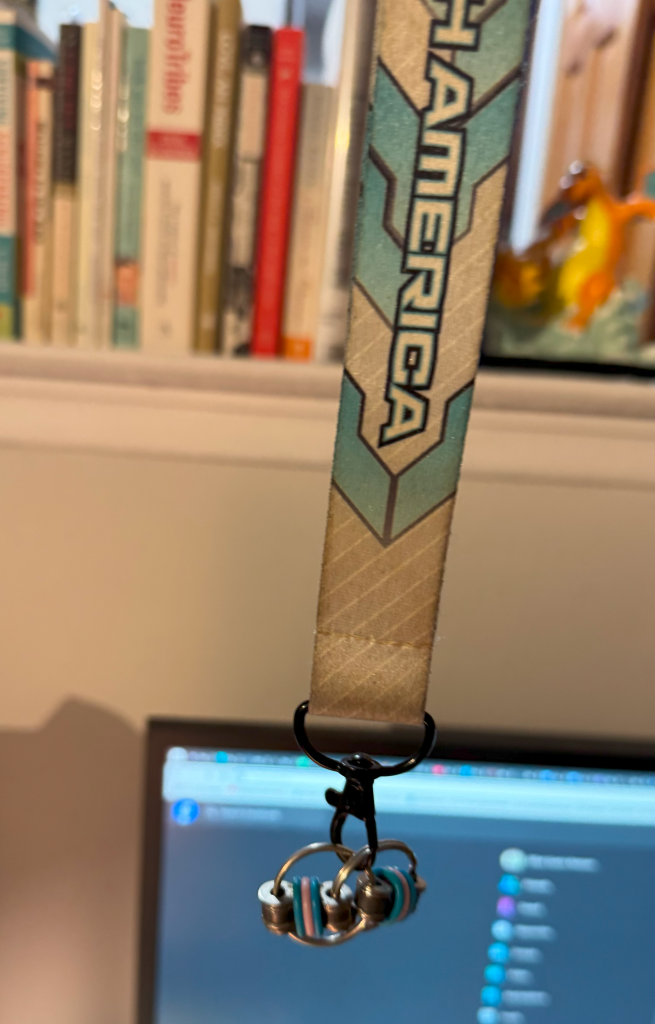
    I made this out of a lanyard (this one is from the Pokémon North American International Championships a few years ago) and a bike chain keyring fidget. This is often my go-to stim tool as I wear it around my neck and don’t have to fumble around in my bag for it. It’s also pretty cheap; there are multiple Etsy listings for $5 plus shipping (like this one) and even listings for fun pride-themed colorways which I might just buy right now! Be right back! (By the way, I have no affiliation with any of the products I may link to in this article, nor am I receiving any compensation for including them.) Anyway, these little fidgets are silent, small, and I think they make a particularly satisfying stim for people who may be prone to skin picking. And you can use any lanyard your heart desires!

    Now, onto the actual stim kits…

    Pocket kit

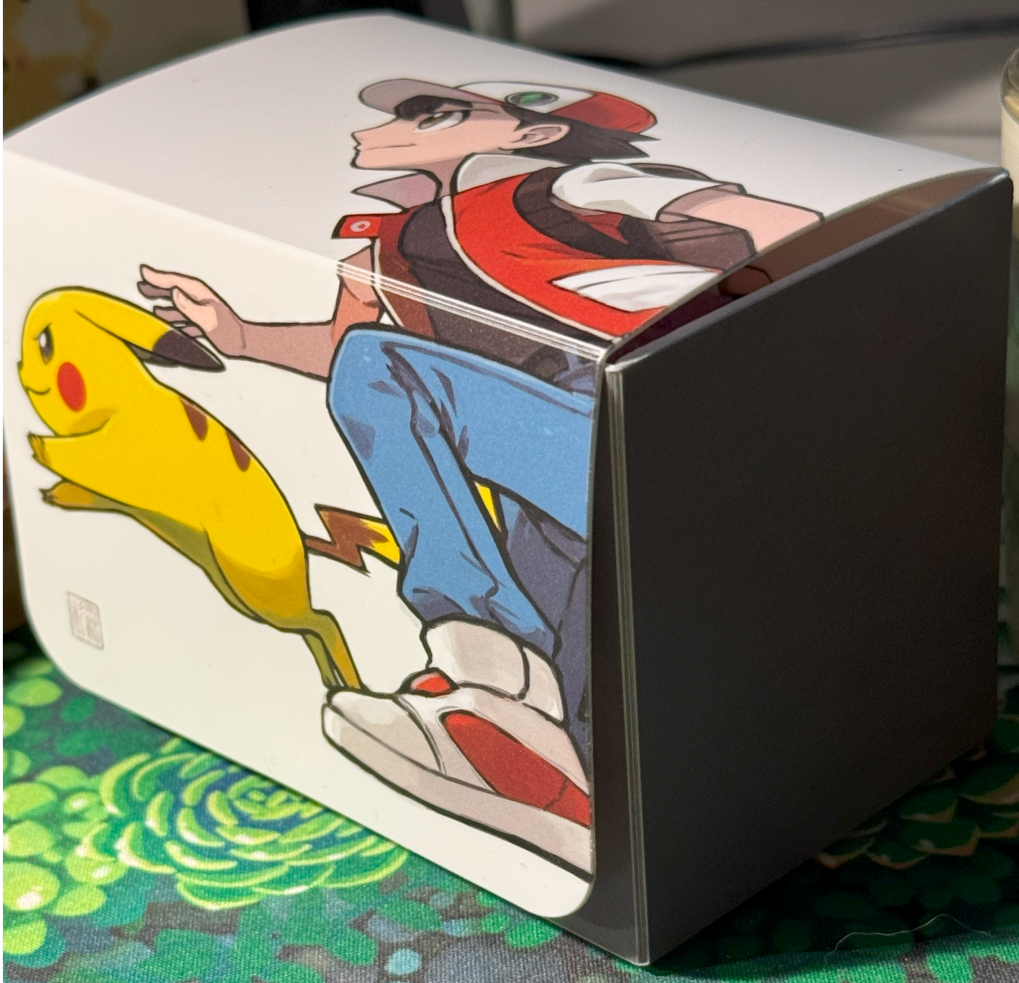
    I’ll call the smallest one the “pocket kit” because it just fits in the front pockets of my jeans (American Eagle Womens’ Jeggings). It easily fits in the front pocket of my mini backpack, as well as my bigger backpacks. As you can see, I’m using a Pokémon box (this will be a theme) which is on sale at the Pokémon Center for $20. It also comes with dice and cute status markers for playing Pokémon Trading Card Game, but my favorite asset was this box. So what’s in it?

    • Magnetic Haptic Slider from clickbricks — I like this stim tool a lot! It’s not completely silent, but it’s quiet enough to fly under the radar in most situations. To me it feels kind of like flicking a lighter, which is something I do… a lot.
    • Another keyring bike chain fidget!
    • Nicotine gum, for reasons stated above…
    • One stick of Crystal Light lemonade and one bag of Tazo Earl Grey tea.

    I’m looking for new stim tools that will fit in the pocket kit, so if you have any recommendations, please send them to me! I really want to hear from you.

    Next, the medium kit…

    Medium Kit

    This one is also related to Pokémon! It’s a Japanese deck box. One of my favorites, so it seems fitting I put some stim tools in there. If you’re not familiar with deck boxes, they are generally not too large. I think this one is around 3 in (height) x 3 in (depth) x 4 in (width). The NeeDoh Nice Cube just fits inside.

    • NeeDoh Nice Cube — I love this squishable sensory tool! It’s a little bit like a stress ball but it feels soft/gooey, almost like putty or slime. It’s not as sticky, though. It’s got a nice weight to it and the size is perfect for my hands. That said, they make other products at NeeDoh; the cube is probably the most popular.
    • Infinity Cube — I got this one at a gas station somewhere on Long Island, but the Etsy creator who I linked carries some really cool colors and right now they’re on sale for $3. Totally worth it! Infinity cubes can be folded into different configurations almost, well, infinitely. I’ve enjoyed using this one for years now. It’s a tried and true inclusion.
    • Fidget Cube — The fidget cube isn’t my favorite fidget, but I do like some of its functionalities. It is nearly silent. I like the buttons (especially the clicky ones, which do make a subdued sound) as well as the switch/lever and the thumbpad (circular appendage).

    That’s right… everything in the medium kit is a cube! (✿◡‿◡) A happy little accident.

    Large kit

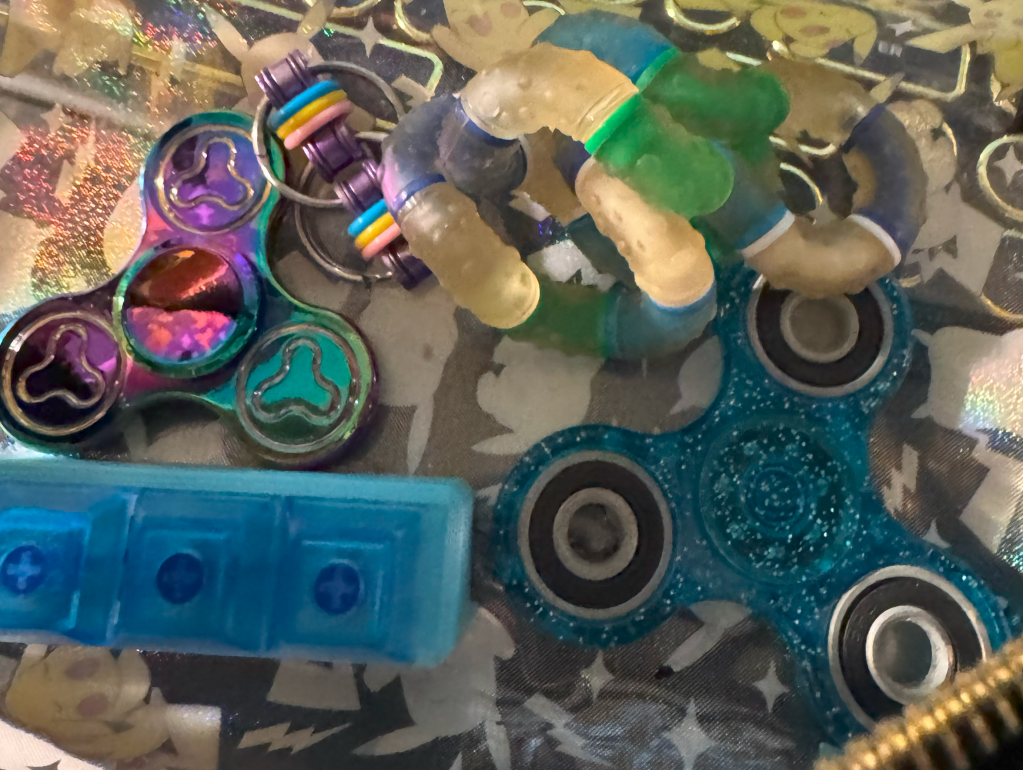
    Now, I don’t want to lie to you, so here it is: a fidget spinner can just barely fit in the deck box I’m using for the medium kit. But, I’m afraid of doing damage to the box by overloading it… so my 2 fidget spinners were included in this amazing bag I got from the Pokémon Center. It’s sparkly! But any toiletry bag should do. Pick your favorite or buy one that suits you!

    • 2 fidget spinners — The blue sparkly one is plastic and lighter than the iridescent metal one. They were both gifts and I quite enjoy using them during long lectures.
    • Another bike chain keyring fidget in “unicorn” colors.
    • Tangle Therapy Relax — Has textured segments with a slightly give to them. I generally like to manipulate it in my hand and don’t like pulling the pieces apart, but Tangles are good for either!
    • Keyboard fidget — This uses mechanical keyboard testers as a stim tool! Mine is 4×1 keys and uses Blue switches (Cherry MX I believe?), so it’s quite clicky and noisy, like typing on a typewriter. However, this listing on etsy says they also have linear switches (which are much quieter) and I bet they could even use both!

    Have I missed an important stim? Let me know in the comments!

    Atmosphere stims

    There are some stim tools that can’t be carried around in a box or a bag, but rather, are meant to be used at home or in a private space. Here are some of those things:

    • Candles/incense/air freshener — I highly recommend Morning Star incense!! They even come with a little holder.
    • Weighted blanket or sleep pod
    • Bubble bath or epsom salts
    • Large stuffies — I have a Pikachu!
    • Swings, indoor or outdoor
    • A medium-sized fan — or bigger; for summer

    So that’s what I’ve learned! Share in the comments your favorite stim tools and how they help you!


    Luminous Mind to be released March 30

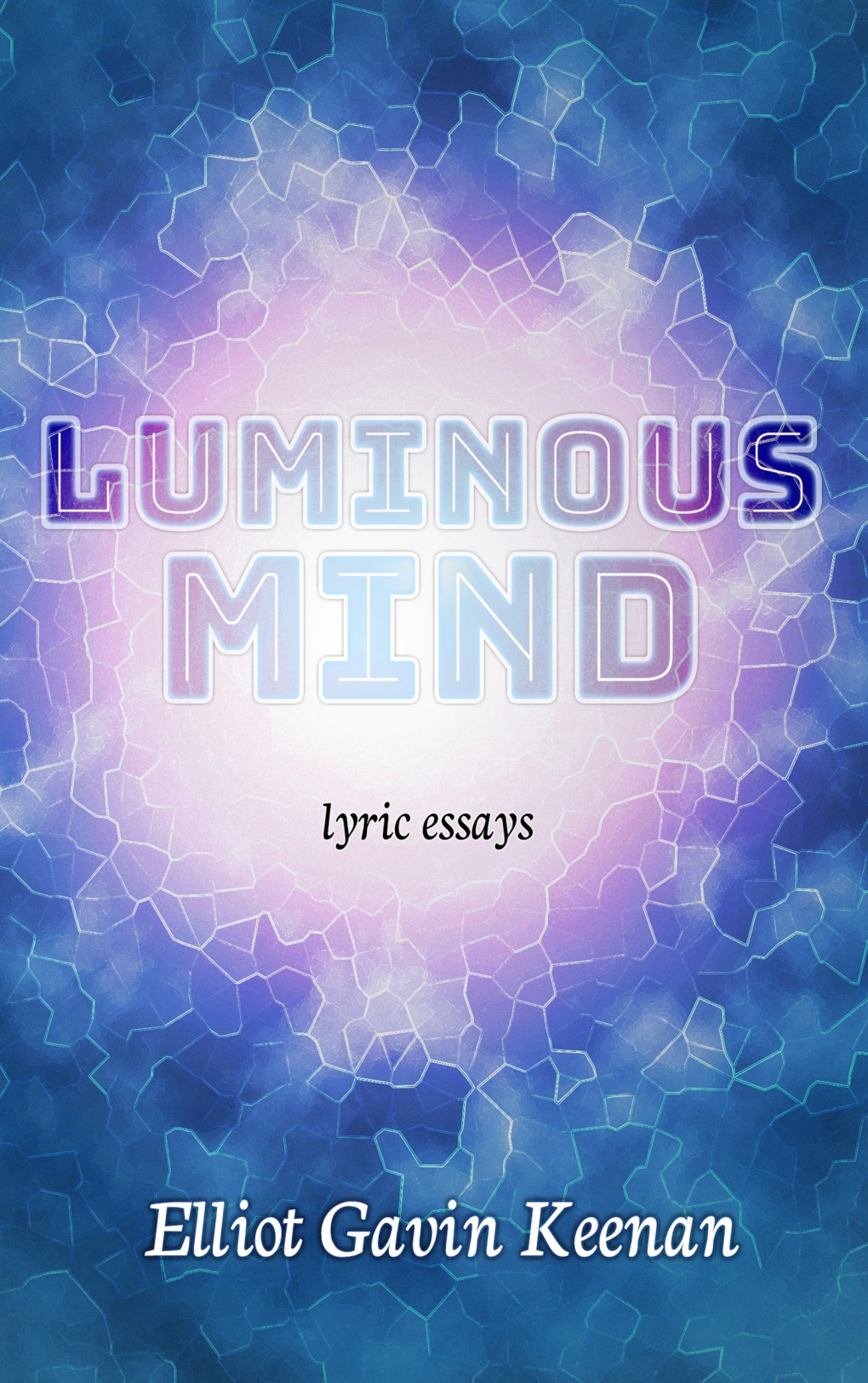
    My name is Dr. Elliot Gavin Keenan. My second memoir, Luminous Mind, is being published on March 30! That’s also World Bipolar Day (and Vincent van Gogh’s birthday). I’m a transmasculine poet with autism, ADHD, and bipolar disorder — among other things.

    Elliot Gavin Keenan arrives as a first-year PhD student in psychology at UCLA. He is autistic and bipolar, aspects of himself he has learned to work with; however, under the sunny Los Angeles sky, something changes. Manias become darker, more distressing, and the cycle of mania and depression accelerates until the boundaries of each state are indistinguishable. By April, Elliot decides to commit suicide. He wakes up in an ICU three days later.

    Luminous Mind is about one young trans man’s struggle with mental illness and the paradoxical trauma experienced by suicide attempt survivors. His rhapsodic prose captures hope, despair, ambivalence, and everything in between. Deeply introspective and honest, Luminous Mind is a story of healing.

    Do you know anyone with bipolar disorder? This book might just give you the insight to understand that person a little better. Or, if you have bipolar, maybe you’ll learn something about yourself!

    Have you ever attempted suicide? Luminous Mind explores healing after experiencing things few people can relate to.

    Do you like poetry? There are several original poems in the book! In addition, poetic logic is used throughout the book, which is focused on relaying subjective experiences through language.

    Are you transgender? Are you autistic (or ADHD)? This book is a tiny piece of our shared history. I’m sharing my story in hopes that we cannot be erased.

    Read the first chapter here!

    Pre-order the ebook here!

    Print edition will be released March 30!


    Neurodivergent App Review: Habitica

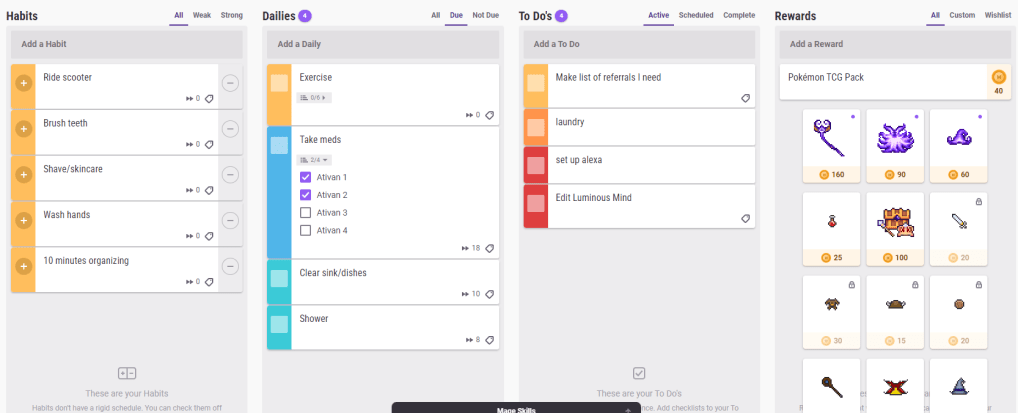
    It seems like everyone’s got their own favorite app for managing daily tasks and to-dos, but so far my favorite is Habitica. I think it could be really useful for neurodivergent people with the right personality — Habitica is very much a “menus” game. If you love fine-tuning and deep personalization, Habitica could be perfect for you.

    Habitica is available as both an app and a web interface. They both have utility, which I’ll discuss, and having both available may be great if you spend a lot of time at your desk. It is free with paid upgrades available; I haven’t paid for any upgrades and none of the features I’ll mention in my review are paid features. When you start playing (we are “playing” since Habitica is all about gamification, or turning your life’s to-do list into a game) you get a pixel avatar, which you can level up, equip items and pets to, and more. But the pixel avatar isn’t even the best feature of Habitica, in my opinion. You could play quite efficiently paying no attention to the avatar at all — more on this later.

    Set habits, dailies, and to-dos all in one app

    It’s possible to use two or even three different apps to track all of these kinds of tasks. A more precise definition:

    Habits: Tasks you want to do regularly (or reduce doing — habits can be negative), but that don’t have a fixed schedule for their occurrence.
    Dailies: Tasks you want to do at specific times, for example, every day, or every 3 days, or every Tuesday and Thursday.
    To-dos: Tasks you need to do once.

    Each task can have checklist items, which increase the value of the task. In fact, there’s a pretty crazy level of detail and precision that can be attained in the settings menu for each task. And the system can have a learning curve, but that in itself makes the system appealing for menus-type people.

    Pause damage as you need it

    For neurodivergent people, it’s important any app can be flexible to avoid overwhelming us. Habitica normally inflicts damage on your character for missing dailies — however, there is an option in the setting menu to pause damage. No damage will be inflicted on you until you turn damage back on again and there is no cost or downside to pausing damage. You can continue to get rewards as usual.

    Custom rewards

    Habitica comes with many built-in rewards, including items for your avatar, eggs and hatching potions (which create pets), and so on. But the primary currency of the game is gold, and you’re able to set custom rewards for in-game gold. I set up a Pokemon TCG pack for 40 gold. Any reward can be integrated into Habitica! Try using a preferred treat, video game time (or any favored activity), or small amounts of spending money as rewards.

    Personalization of the app and the web interface

    The Habitica app allows you to choose from an impressive number of color themes, sound themes, and even custom app icons. Meanwhile, the web interface allows you to see everything you have to do at once — and gives the option to toggle tasks that are not due today so that they are invisible.

    The thoughtful design and customization features of Habitica are what make it the best app I’ve used. It can be overwhelming, though, for people intimidated by those features. But it’s free, so why not give it a try?

    *I am not affiliated with Habitica.


    Subtle Signs of Bipolar Disorder

    Since the early days when Emil Kraeplin defined the characteristic symptoms of bipolar disorder, a certain set of core features have been used to identify the disorder. Changes in mood, energy levels, and sleep all spring to mind. Then, there are other things… symptoms or signs that aren’t core to the identity of bipolar psychopathology, but might indicate a relatively higher or lower risk among individuals who are otherwise at a comparable level of risk for bipolar disorder. In other words, there are subtle signs that can help identify whether or not a diagnosis of bipolar disorder would be applicable to any given individual. Perhaps you’re looking out for these signs in your own behavior — or, perhaps you’re making observations about a friend or family member who you suspect may have the disorder. In any case, here are a few subtle signs.

    You don’t have a consistent bedtime.

    People with bipolar disorder are known for their changeable sleep schedules. Most people, when asked a question like, “When do you usually go to bed?” have a quick and easy answer. But if that question gives you pause and necessitates a complex timetable calculation in order to answer, it could be a sign that your circadian cycle is out of whack.

    Bipolar disorder is one cause for circadian rhythm dysfunction. There are others — some, like non-24 hour sleep/wake disorder, cause a person’s bedtime to cycle predictably around the clock. But the changes in bipolar disorder are unpredictable. People may stay up late for weeks or even months, only to crash overnight into a routine of sleeping half the day or more. There is currently no way to know for sure when someone’s moods will change.

    You have hyperfixations.

    Have you ever become obsessed with a new hobby, concern, or passionate interest, only to grow bored of it and abandon ship before completing a grand project? Bipolar people are often known for their various pursuits (especially in the creative domain), as well as their mercurial sense of motivation to finish the tasks ahead of them. If you take on far too many tasks, or frequently change tasks without completing the initial task, you may be bipolar — or perhaps you just have what scholars call a “cyclothymic temperament”.

    The term hyperfixation comes primarily from the ADHD world, but like many symptoms of ADHD, they’re a subtle sign of bipolar disorder too. Similarly, more generalized difficulties paying attention and staying focused are subtle signs.

    You’re physically absent a lot.

    As a rule, I don’t think people with bipolar disorder are emotionally absent from the lives of our loved ones — all too often, it’s actually the opposite, and our powerful emotions can impose themselves on people and situations. However, we are physically absent… quite a lot. Maybe you’re calling out sick from work again, or you’re about to drop a letter grade due to your absence from class; as a child, you may have been disciplined at school. This tendency to not show up to things can hinder achievement both personally and professionally.

    You have neurological soft signs.

    Neurological “soft signs” refers to certain problems with motor coordination and sensory integration that are observable on an exam from a neurologist. This includes difficulties with fine motor skills, errors in sequencing motor commands, and challenges with sensory perception. These problems are commonly talked about in reference to schizophrenia. However, it stands to reason that they also have at least a moderate association with bipolar disorder as well. Both bipolar disorder and schizophrenia are mental illnesses with a neurological or neurodevelopmental origin, and they have genetic overlap, as well as overlapping symptomatology (psychosis is the hallmark of schizophrenia and may be present in bipolar disorder as well).

    Are there any other subtle signs you can think of?