
Dreams & Interpretations (part 1)

I didn’t used to have a lot of dreams. Over the past few years, I’ve starting having more, some of them very vivid and strange. In this series of blog posts I’m going to attempt to find common themes within these dreams. I’m not analyzing them in the psychoanalytic sense; I’m merely looking at the composition of the dream and how it relates to itself and my life.

Body Horror

Dream: I’m suddenly unable to talk or make any sounds. I try to cry for help, but no sound comes out. I open my mouth and feel a string coming out of it. Slowly, I pull the string, and realize that a tampon is lodged in my throat. I gag and continue pulling the string, and eventually the tampon comes out and blood gushes out of my throat. I wake up.


Interpretation: This is actually a recurring dream I’ve had, although I haven’t had it for quite some time. It’s probably the one of the most aggressively transgender dreams I’ve ever had.


Safety Checks

Dream: I wake up in the middle of the night in a hospital bed. Dark, shadowy figures appear in the little window of my door and then vanish. I wake up.

Interpretation: Another recurring dream, often at the end of other dreams, like the first one. This one I used to have after my discharge from South Oaks Hospital. I didn’t like it there, and this dream (a fairly accurate representation of nighttime safety checks) was the result of my stress.


Trust Issues

Dream: I wake up in my hospital room to an electronic jostling sound, like an InkJet printer, coming from the vent above my bed. I go to get my vitals taken and eat breakfast in the day room, mentioning to a nurse that there was this weird sound in my room. I retire back to my bed. Two people step into the room, wearing white coats, and I expect them to be doctors — but I don’t recognize them. One of them pins me to the bed and the other injects me with a strange liquid, which makes the world hazy. I realize that these people must be scientists and the InkJet printer sounds must be their machines. Their injection was supposed to make me lose my memories of it.


I wake up later in the day, with my memories still intact — the serum didn’t work. Thankful, I decide I better contact someone. I call my psychiatrist on the phone and tell her that alien scientists are on the ward. “There are?” she says. “How do you know they’re scientists?” The white coats, I tell her. She assures me she will get to the bottom of this, but as we hang up, I realize my mistake: the alien scientists will simply wipe her memory.


I walk back to my room, but am confronted by the scientists in their white coats; I run in the opposite direction only to be stopped at the double locked doors with their “AWOL RISK DO NOT OPEN” signs. I laugh. Since their injection didn’t work on me, they’ll have to kill me. “I guess being killed by aliens is a pretty cool way to die,” I say. Suddenly, a beam of white energy enters my body and comes out through my palm, striking one of the alien scientists. He crumples to the ground, and his body slowly changes, reverse-aging until he is merely a fetus on the ground.


Interpretation: It seems fairly evident that the “alien scientists” in their white coats and brandishing IM injections are a stand-in for psychiatrists. What complicates that, though, is the fact that when I am looking for someone I trust to call, the first person I think of is my psychiatrist. So, there seems to be a distinction between trustworthy and untrustworthy psychiatrists. The reverse aging beam seems odd until it is considered that at the height of my psychiatric crisis I was age regressed into the mind of a child (an older child, I’d say 10-12 years old). In a way, what I inflict on them was the same pain I’d experienced myself. This might be a metaphor for opening up to them.
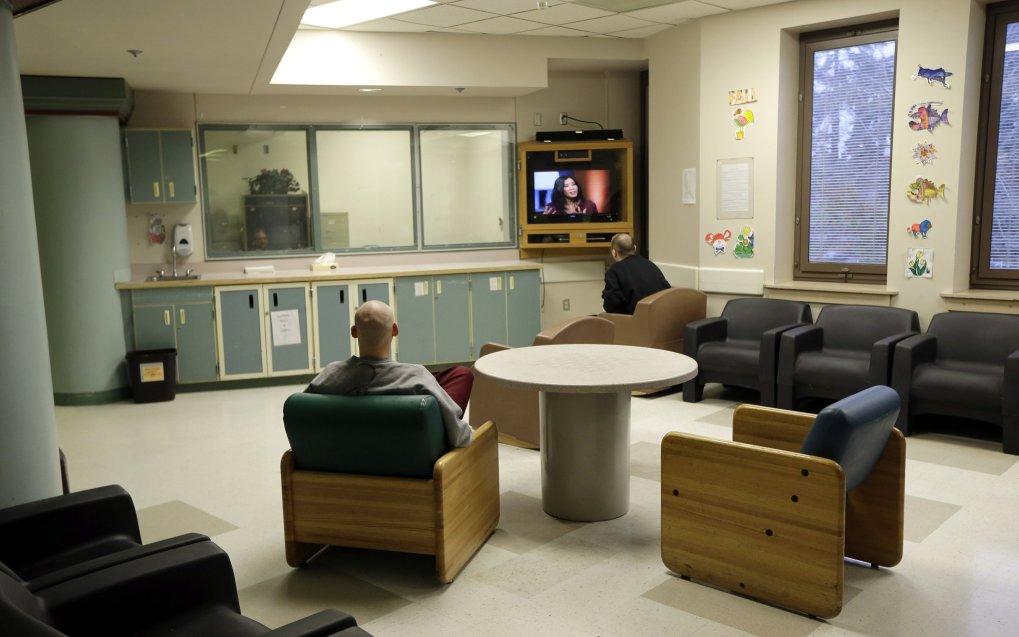

What’s it like to be in a psychiatric hospital?

I’ve been hospitalized 17 times. At this point, it seems perfectly routine. I pack my carry-on suitcase, grab my Pikachu stuffie, and I’m on my way. I know what to expect. However, whenever I’m in the “psych corner” of the ER, there’s always someone being admitted for the first time, and they’re usually crying. I cried during my first admission, too — my therapist told the police to wait until I stopped to put me in the car. I’d read about the hospital online, but still, I didn’t know what to expect and I was very scared.

So, if you’re ever hospitalized, here’s what to expect.

Limited Choices

Where you can go, what you can do, and even what you can eat are very limited when you’re in the hospital. Psychiatric units vary in size and structure, but it will likely be smaller than you would like. Everyday choices are made manageable for people with acute psychosis or severe mood disturbance, which means there are not very many choices.

Here are some activities which are generally allowed, and which I personally recommend:

  • Reading books. The choices of books on the unit are likely to be very slim, so I recommend bringing your own books. Easy to read books may be for the best, as medications can make reading challenging; I enjoy middle grade and young adult fiction.
  • Talking on the phone with friends and family. There is always a phone. I have been in really outdated units where the phones were actual pay phones that required quarters… but in my experience, this is very rare. Phones are usually made unavailable during groups and meal times.
  • Talking to other patients. The other patients in the hospital are likely to be interesting. Some of them will seem “normal” and some of them won’t; a few may be very agitated or aggressive. Don’t be afraid of them, they don’t mean you harm and if things get out of hand the staff will know what to do. It’s a good opportunity to get to know other people with mental illness, and I’ve had many interactions which I’ve remembered for years.
  • Card games. Sometimes there are board games, which may or may not be in playable condition, but there is almost always a deck of cards. Playing cards is a great way to pass time and interact with other patients at a level that isn’t very demanding. I learned to play Rummy 500 in a psychiatric hospital!
  • Take a shower. It’s easy to forget that you need to shower when everyone is wearing pajamas and look like they’ve been in bed for a year, but showering is something that can affect how the psychiatrists see your level of functioning. It’s also a way to pass time in itself. Sometimes you can bring your own shower products and deodorant, which I do recommend because it will make it seem like you’re doing your whole routine.
  • Go to groups. There will likely be a few groups throughout the day, particularly on weekdays. They are likely to be somewhat simple and plain, which makes it so everyone can participate as much as possible. Going to the groups is probably the single biggest action you can take to expedite your discharge. It’s not the only factor and it won’t make a miracle, but it’s worth a try.
  • Go outside. There will be some kind of small outside area. Sometimes it’s on the roof, sometimes it’s a courtyard or a fenced-in patio. You can usually go outside at designated times during the day, weather permitting.

What to bring and what not to bring

Hospitals do vary in their policies and if possible, you can look up their website or call in advance to see what they allow. But this often isn’t possible because when you go to an ER for psychiatric reasons, you could be (and often are) sent to a completely different hospital. Therefore, use your best judgement and pack what you can. I pack a small roller suitcase so that I can fit everything I want.

  • Don’t bring electronics. Cell phones will not be allowed, nor laptops or tablets, or anything that has the ability to take photos, record videos or audio, or access the internet through a browser. However, there are a few exceptions which may be made at some hospitals — UCLA has allowed me to bring old Game Boy consoles, which aren’t capable of anything except playing the inserted cartridge; a basic Kindle e-reader; and an MP3 player with Bluetooth headphones, no wires and nothing with any of the aforementioned capabilities. Bring chargers for your phone and any of these items if you bring them, but be aware you won’t be allowed to charge in your room and staff will supervise your items while charging. (P.S. I’ve heard that electronics are allowed in the UK, so I can only speak for the US.)
  • Bring a light jacket. If you live in a cold climate, you can also bring an outside jacket, but you will want a light jacket for inside the hospital because it’s usually a little bit cold in hospitals. If you bring a hoodie, make sure it does NOT have strings; the same goes for sweatpants and shorts. Strings will probably not be allowed.
  • Bring clothes that make you feel normal. Some people will specifically say to bring comfortable, casual clothing. That is a good idea, but I think the most important thing is to bring clothes that make you feel like yourself, because it’s very easy to feel disrupted when you’re in such a different environment than your usual life. Don’t wear a tuxedo or a $500 designer item, because you’re probably gonna spill cranberry juice on it and you know they wash everything on hot, but wear whatever you want — as long as it doesn’t have strings.
  • Bring slip-on shoes. Some hospitals will not allow you to wear shoes at all. The fancy hospital socks with treads on the bottom are very real, and you’ll get some in the ER. If shoes are allowed on the unit, you’ll have to take the laces out, so bring shoes without laces. Definitely don’t bring boots or anything with a heavy sole, as those will probably not be allowed.
  • Bring books.
  • Bring shower supplies and deodorant. It’s not essential, so if you don’t have space, don’t bring them. But I like them.
  • Bring a comfort item. I always bring my jumbo Pikachu stuffie. Something small would work, but I’m excessive.

Things to be aware of

  • Quiet room. That’s a euphemism, for sure. Most hospitals have one although I think at UCLA they just move you to a different unit if you’re in that place. Basically, this is where they put people who need to calm down. Injectable medications (seems like Zyprexa or Haldol, usually) are often involved, as are restraints. It might actually have padded walls like you see on TV. But if you’re worried about going there, in my experience, you’re probably not going there.
  • Furniture. You won’t notice this until you’ve been in a few hospitals, but they all have a similar physical design with very similar furniture. That’s because they’re designed so you can’t tie anything onto them, if you were to have strings. All safe furniture looks pretty much the same, and it’s very 70s for some reason.
  • Smoking. There are a minority of hospitals that still allow you to smoke cigarettes at designated times. Feel free to bring your preferred kind if you do smoke, but don’t load up; in hospitals I’ve been where smoking is allowed, there are usually house cigarettes available. They are very cheap and seem to be made with cigar tobacco, but trust me, it’s better than nothing.
  • Voluntary status. Not to scare you, but even “voluntary patients” are not 100% free to leave whenever you want. It is better to be admitted voluntarily than involuntarily, but if you do try to leave on a voluntary basis and your treatment team feels strongly that you’re not ready, your status can be changed. At least, mine has been in the past. So it is kind of a catch-22 situation. Some hospitals are more mindful about this than others. It also seems to vary by state.

I hope this overview has been helpful. And if you’re ever hospitalized, don’t worry; it is an adjustment, but most people get used to it very quickly. It’s designed that way. Meals, groups, outside breaks, and pretty much everything will occur at the same time every day. It’s weird how you start to feel hungry for dinner at exactly 5 PM. But it happens quickly!