The Impact of Bipolar Disorder on Physical Health

Those of us with bipolar disorder can bear a heavy burden when it comes to co-occurring conditions, medication side effects, and we are at higher risk for many diseases. Some of these effects are ameliorated by efforts at early screening and detection. We hope (perhaps naively) to catch tardive dyskinesia before it becomes permanent and Stevens-Johnson Syndrome before it becomes fatal. Likewise, in the US we have a federal registry for clozapine patients that aims to detect agranulocytosis (destruction of white blood cells, which disables the immune system) with rigorous blood testing.

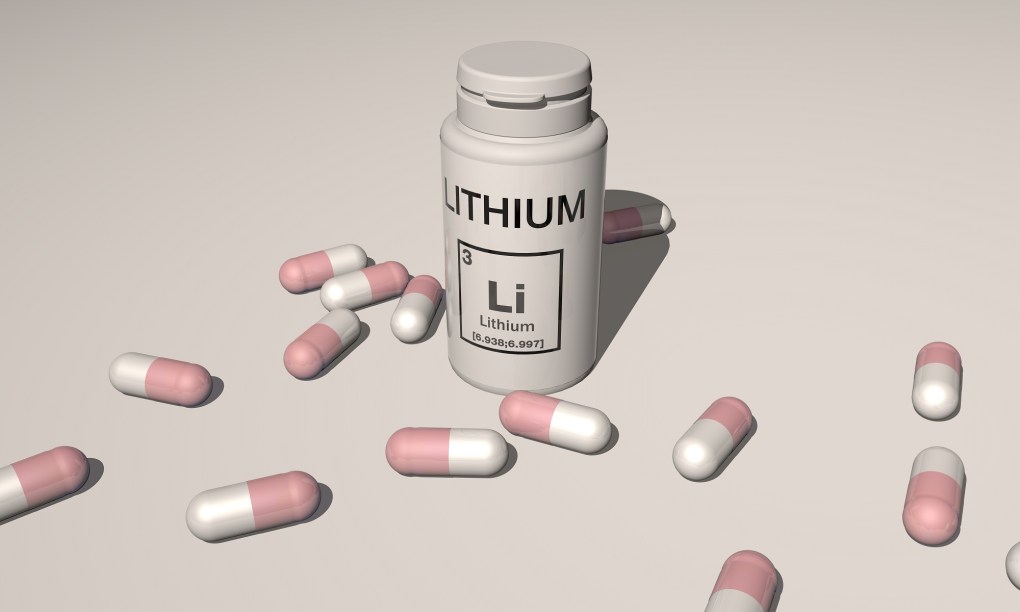
Other medications may take a more nefarious route to affecting our health. Lithium is able to cross membranes and take up residence inside your body’s cells, where it stubbornly resists removal by hemodialysis. Years down the road, it can lead to kidney failure, not to mention destroying your thyroid gland.

But there’s more than meets the eye to the interface of bipolar disorder in medical care.

Bipolar disorder is widely stigmatized by medical professionals

I once presented at the ER for an abscess the size of a tennis ball erupting from my thigh (a consequence of my then-undiagnosed hidradenitis). I showed the triage nurse; she documented it. Then she asked for my phone and my shoes.

“The psychiatrist is going to see you,” an aide informed me.

“What? Why? I have an abscess!”

They didn’t care to listen to me. Two hours later, a psychiatry resident showed up at my bedside. He took a look at my abscess.

“I don’t know why they sent you over here,” he said, sighing. Another two hours passed before a “medical” MD came to take a look and determine (within minutes) that we were going to drain my abscess. It was extremely painful. Surely, anyone would be a touch irritable or agitated in such circumstances. But I’ve been told that having bipolar disorder in my history was good enough reason to detain me, independent of any other facts. You know what that’s called: discrimination. I hadn’t complained of any suicidal planning or expressed a desire to be admitted. In my place, someone without those two words in their file — “bipolar disorder” — would have been seen by a medicine doctor hours earlier.

But, to be fair, it’s not just bipolar disorder that is stigmatized. I was once being detained in the psych area of the ER, when an aide mentioned to another aide that she had PTSD. I was in a fairly good mood, and I joked, “You’re one of us!”

“I’m nothing like you,” she said, frowning coldly. “PTSD is not a mental illness.”

I was taken aback by her confidence and we started to argue when the charge nurse walked in. We both told our side of the story and the charge nurse decided to move the aide to a different part of the ER. She did not look happy, let me tell you.

Bipolar disorder can affect how drugs work in your body

Whether from drug-drug interactions or simply unusual metabolism of certain medications, prescribing medicine for physical health reasons is a tricky business when you have bipolar disorder. The most commonplace medications can be problematic: antibiotics (can cause mania), ibuprofen or most other NSAIDs (interacts with lithium and can raise lithium levels to toxic, resulting in profuse vomiting — try telling that to an overworked nurse who thinks you’re seeking pain meds!), prednisone or other steroids (can cause mania), Sudafed (stimulant — may cause mania)… the list goes on.

This is what I’ve found with alternatives. This only represents my own experience and should not be taken as an endorsement of research in this area (probably because there isn’t much).

Antibiotics: Doxycycline should be avoided, but amoxicillin is okay.
Ibuprofen/NSAIDs: The exception to this rule is old-fashioned aspirin, which is safe if you’re on lithium!
Prednisone/steroids: Unfortunately I haven’t found an effective alternative. You just gotta play the odds. Being manic is better than being dead.
Sudafed: I recommend diphenhydramine (Benadryl) which is effective, safe for bipolar disorder, and cheap.

Having bipolar disorder can increase your odds of having another disease

Some diseases and risk factors for diseases, including metabolic syndrome, obesity, diabetes mellitus (type 2), and diabetes inspidus (if you’re on lithium) appear to clearly be linked to certain medications people might take to treat their bipolar disorder. But others are less clear. Headaches are associated with bipolar disorder, especially migraines and cluster headaches (less commonly chronic tension headaches). Genetic evidence has aligned to connect epilepsy and bipolar disorder (such as the SP4 gene, which was published about in September 2024) and this is concordant with the longstanding clinical observation that bipolar disorder often responds to cocktails including anticonvulsant medications such as Lamictal (lamotrigine), Depakote (valproate), even Topamax (topiramate). Large studies have also shown that people with bipolar disorder are more likely to develop Parkinson’s Disease, independently of cases that are likely drug-induced.

Surprisingly, when COVID-19 first swept the world, some research suggested that people with bipolar disorder were more likely to have a severe or life-threatening COVID-19 disease course even when controlling for factors such as obesity. Taken together with available evidence, this may lend support to the idea that alterations in the body’s inflammatory pathways may be causal to bipolar disorder. It has long been recognized that influenza infection can precipitate manic or psychotic episodes. In January 2018 I had the flu and I became preoccupied with the fact that I (definitely) had AIDS and I began writing long goodbye letters to my friends. Luckily, the flu was better in about 3 days.

Drugs (use, abuse, and misuse) cause problems

As I mentioned, certain medications can have severe side effects…
Neuroleptics (such as Haldol/haloperidol): Neuroleptic Malignant Syndrome, Tardive Dyskinesia, Movement Disorder
Atypical Antipsychotics (such as Zyprexa/olanzapine, Risperdal/risperidone, Abilify/aripiprazole, and clozapine): Agranulocytosis (Clozapine specifically); Akathisia and movement disorder (particularly Abilify and Vraylar)
Anticonvulsants: Stevens-Johnson Syndrome (especially lamotrigine — and keep in mind that risk for SJS increases whenever you start or stop taking the medication suddenly, and if you do this multiple times your risk climbs higher and higher)
Antidepressants and other serotonergic drugs, such as stimulants and street drugs like MDMA: Serotonin Syndrome

Bipolar people are famous for resisting taking medications that could help them, which can make the above side effects more likely. Not taking your meds can also make bipolar disorder worse, and make you more at risk for accidental deaths such as a car crash, while also making you more at risk for intentional death (suicide). Lithium has uniquely shown a capacity to lower the risk of suicide.

Not only that, but it will always be assumed that you are “drug seeking” especially when you try to explain the bit about why you’re too good for the ibuprofen that everyone else takes. But no fear, the nurse has your back and will get you some IV lorazepam (Ativan) while they process your discharge.


Medication review: Abilify (aripiprazole)

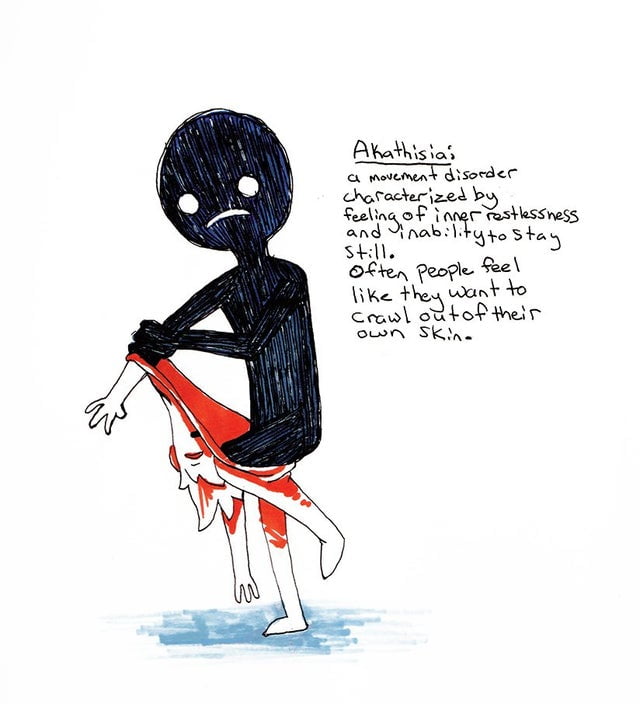
Do you remember the TV commercials for Abilify? At the time, it was being marketed in such a way that a lot of people thought it was an antidepressant. It’s not, though. Abilify is most definitely an antipsychotic, primarily indicated for schizophrenia and bipolar disorder, and it comes with the full list of potential side effects that another antipsychotic might come with. When Abilify was first released, its manufacturer pushed a lot of half-truths (or null-truths) like “Abilify is weight neutral” (26% of patients experience clinically significant weight gain, albeit not as much as Zyprexa) and “Abilify doesn’t cause movement disorders” (it can cause tardive dyskinesia (TD), and 9% of patients experience akathisia — a profound inner restlessness that patients often describe as wanting to “crawl out of [their] skin”). Overall, 15% of patients experience a serious adverse drug reaction.

All of that said… Abilify isn’t a bad drug.

I took Abilify for four years before developing a TD-like movement disorder that ultimately led me to discontinue it. (The same movement disorder worsened on Vraylar, which is a very close relative of Abilify.)

It might be fair to say that Abilify is misunderstood. I don’t think it should have been marketed the way it was. But when we’re talking about schizophrenia and bipolar disorder, well, it’s not the worst of the options. Clozapine and Zyprexa are worse for weight gain. Haldol is worse for movement disorders, like TD and akathisia. But is it effective?

Actually, Abilify was pretty effective for me. When I first started taking it, I would sleep all day. I’d fall asleep in my classes, like, head-on-desk, passed out. (This was particularly troublesome in my class on child abuse.) Then I started taking a stimulant for my ADHD, and everything seemed to be in harmony. Until a new psychiatrist took me off of Abilify to try a newer drug (Latuda — which did nothing for me). When I eventually went back on, I had all kinds of weird side effects. I couldn’t sit, or even stand still — a condition that my psychiatrist would later describe as akathisia. And my head started to shake involuntarily.

So how effective is it, really? The maximum dose of Abilify is 30mg, but benefit at doses higher than 15mg has not been established. A concept that is sometimes floated around in psychiatry is that of equivalent doses, usually CPZ (chlorpromazine) or OLA (olanzapine) equivalents. In this case, we’ll use haloperidol equivalents. 15mg Abilify is equivalent to 7.5 mg of Haldol which is also equivalent to a whopping 750mg quetiapine (Seroquel) — very close to the maximum dose of 800mg. We can see here that Haldol is stronger than Abilify, and Seroquel is weaker. We can tell based on the maximum dose of each and where the others stand in comparison.

Think of it like this: the maximum daily dose of Haldol is 30mg. The equivalent dose of Abilify is 35 mg — above the maximum. So it’s a bit weaker than Haldol. Meanwhile, Seroquel is much weaker. (In fact, Seroquel is the lowest potency antipsychotic, and usually isn’t used to treat psychosis.)

The moral of the story is not to trust the commercials put out by drug companies. I won’t be taking Abilify again, and unfortunately my movement disorder has never completely gone away. For some people, though, it’s a great medication.


Medication review: Lithium

To kick off my series of medication reviews, I have to start with lithium. It has a certain symmetry that is almost beautiful: it saves my life every day by reducing the amplitude of my bipolar symptoms, yet in excess, it almost took my life. I couldn’t get the metallic taste out of my mouth for weeks. Here’s the thing: if you’re bipolar 1, there’s a good chance that it’s the single most effective medication out there. It is for me. That’s why 6 weeks after the overdose in 2018 I was put back on it. At one point, the pharmacy was dispensing it to me weekly.

Lithium is so effective for some people, and not for others — so, researchers talk about “lithium responders” and “nonresponders”. There are certain subgroups of people who tend to be responders. For some reason that is not entirely clear, people who have manias before depression are more likely to be responders than people who have depressions before mania (and most people are consistently one or the other).

Lithium is all-natural. It comes from the earth; it is mined for use in batteries. Discovery of lithium’s mood stabilizing properties in 1949 (though I’ve heard that indigenous Americans once soaked their mentally ill in lithium-rich hot springs) was a happy accident. Yet it has nearly as long been known to cause kidney damage, thyroid damage, diabetes, and more. I have a skin condition called hidradenitis suppurativa that was likely caused by lithium. It causes my inner thighs to develop painful lumps that turn into bleeding lesions, and occasionally develop a secondary infection of the skin and soft tissue.

As terrible as all of that is, I don’t feel I could be living the life I live today without being on lithium. I take 1200mg daily, though the dose is measured by blood level, so one person’s 1200 could be another person’s 1000, or something like that. It has enabled me to recover from the state I was in around 2018, to stay out of the hospital and out of trouble.

Lithium’s mechanism of action is quite complex. It alters the activity of voltage-gated channels throughout the brain. There are no other drugs closely related to lithium, or that share its mechanism of action. Pharmaceutical companies haven’t been able to improve upon it. It remains unique in its treatment of bipolar disorder. One of its more notable clinical features is that it reduces suicidality. It’s ironic to note lithium’s high potential for toxicity.

A common side effect of lithium is tremor. I notice it mostly in my hands; they shake and it’s difficult to eat with a spoon. Interestingly, in toxic situations, the tremor can get much worse. Lithium toxicity also causes profound nausea and vomiting. Toxicity can result from dehydration, or even from travel from a low elevation to a higher elevation. But it’s not just the narrow band between therapeutic and toxic doses that makes lithium deadly — it’s the fact that there is no antidote to lithium toxicity, and lithium doesn’t bind to activated charcoal like most other drugs. Only with hemodialysis can lithium be removed from the body.

What to do if you’ve been prescribed lithium? Drink a lot of water, and wait 1-2 weeks to really feel the difference. Lithium has been absolutely lifesaving for many people. Maybe it will be for you.


Akathisia: an inability to rest caused by antipsychotics

Akathisia is a clinical term for extreme inner restlessness. People who are experiencing akathisia have great difficulty sitting still, or maybe even sitting at all. I first experienced akathisia on Abilify (which I ultimately discontinued because it gave me a facial dyskinesia), and it continued to plague me as I tried different antipsychotics, such as Haldol. I found myself unable to do anything except to go outside, pacing back and forth and smoking cigarettes. Propranolol offered me some relief from the worst of it, but the effect eventually faded.

The medications that are most likely to cause extrapyramidal side effects (EPS) — including tardive dyskinesia — are also the most likely suspects for akathisia. In fact, you might even say akathisia is a type of EPS, even though it does not cause per se involuntary movements. Common suspects would include Haldol and probably also Abilify, which has much greater risk of EPS than we once believed.

It’s excruciating to live with akathisia, and yet most people have never even heard the term. A common descriptor is the feeling of “wanting to crawl out of your skin”.

I’ve had some trouble over the years differentiating between akathisia and hyperactivity associated with my ADHD. The main difference between these two scenarios is the cause, but when you’re on a regimen of multiple antipsychotics plus lithium plus stimulants plus benzodiazepines it becomes difficult to discern cause and effect. No doubt in my mind, at its worst akathisia feels worse and even more frustrating than ADHD — but what about those days where it’s just kind of there?

I’ve also experienced restless leg syndrome. Some scholars believe there is a link between RLS and akathisia — essentially, that akathisia is like RLS experienced during the day (as well as at night — akathisia has kept me awake many nights). I would say this is a pretty apt comparison.

RLS and akathisia may be related.

When I first started propranolol, and was able to sit and rest for a few minutes for the first time in weeks. It was like getting your first pair of glasses, and realizing you can see clearly now. The relief was nearly immediate. Unfortunately, it faded somewhat over time. But I’ll remember that instant where it hit me, the moment I put on the glasses, forever. I hadn’t even realized how bad it was until then.


How does lithium work?

Ah, lithium; it’s been our gold-standard treatment for bipolar disorder for many years, and can work for people who have failed other drug trials. It is also one of the only drugs known to decrease the risk of suicide1. But how does it work?

It’s a bit more complicated to understand than, for example, an SSRI (which, ultimately, increases serotonin in the synapse, through a fairly intelligible mechanism of stopping reuptake). Despite knowing since 1949 that lithium was an effective treatment for bipolar disorder, we still don’t fully understand its mechanism of action.

There are a lot of signalling pathways in the brain.

One of the difficulties in determining this is that lithium goes everywhere in your body. Within the brain, it can cause an absurd number of changes through numerous signalling pathways. Like other drugs, it can cross the brain-blood barrier (an important quality for psychiatric medications, since they target the brain) but, uniquely among psych meds, it can also enter your intracellular space — hiding inside your cells, instead of just floating around in your blood.

It is excreted by the kidneys in urine, although it is also known to be excreted in human sweat and tears2. (I’ve had hyper-salty tears caused by lithium every so often.)

Lithium appears to increase the concentration of some neurotransmitters (potentially serotonin and GABA) while moderating the effects of dopamine and norepinephrine through its effects on voltage-gated channels3. This action causes a broad cascade of effects throughout the entire brain that restores balance in people with bipolar disorder. Lithium can get into any cell in your body, and it goes inside your neurons (brain cells) too. This is how it affects voltage-gated channels and moderates the activity of all neurotransmitters.

Although we usually call it a mood stabilizer, it’s not related to any other drug we put in this class, since it is not an anticonvulsant. Lithium is probably most accurately classified as a neuroprotective drug4, like memantine (a drug typically used for Alzheimer’s disease). There is even some speculation that memantine could augment the effect of lithium, due to its similar mechanism of action, but specific to the NMDA receptors.

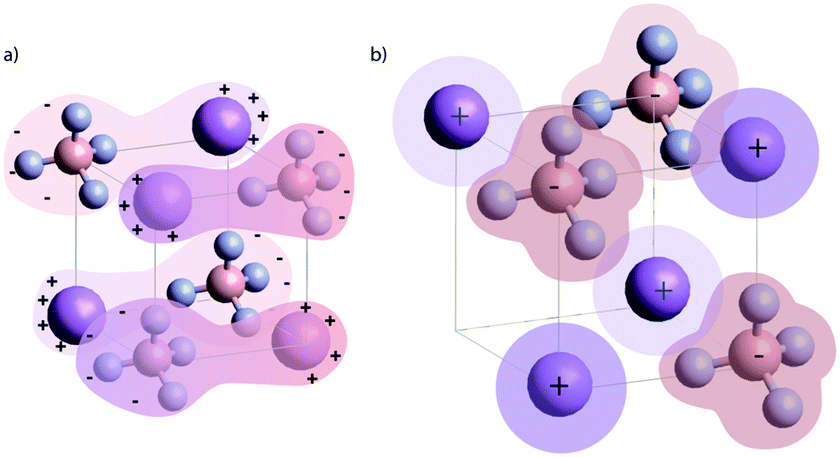
A key point to understanding the pharmacodynamics of lithium is that lithium, in the human body, can use the same transporters as sodium. It fits where sodium should go — therefore, it exits cells through active transport systems designed for sodium, but at about half the speed of sodium. The similarity of lithium and sodium explains why lithium is excreted by the kidneys and not metabolized by the liver.

a) lithium salts; b) sodium salts

This is also why activated charcoal will not absorb lithium. Your body sees it as a metallic salt (it has a positive charge), and metals (or charged ions) are not attracted to charcoal. In addition, the similarity of sodium and lithium creates a sort of sodium-lithium ecosystem in your body; if you maintain a steady dose of lithium but drastically reduce your intake of sodium, your lithium levels can rise to toxicity.

References

  1. Kessing, L. V., Søndergård, L., Kvist, K., & Andersen, P. K. (2005). Suicide risk in patients treated with lithium. Archives of General Psychiatry, 62(8), 860–866. https://doi.org/10.1001/archpsyc.62.8.860
  2. Fraunfelder, F. T., Fraunfelder, F. W., & Jefferson, J. W. (1992). The effects of lithium on the human visual system. Cutaneous and Ocular Toxicology, 11(2), 97–169. https://doi.org/10.3109/15569529209042704
  3. Lenox, Robert H., H. C.-G. (2000). Overview of the Mechanism of Action of Lithium in the Brain: Fifty-Year Update. 61.
  4. Gray, J. D., & Mcewen, B. S. (2013). Lithium’s role in neural plasticity and its implications for mood disorders. Acta Psychiatrica Scandinavica, 128(5), 347–361. https://doi.org/10.1111/acps.12139

One bipolar person’s drug regimen

Currently, I take 8 medications for psychiatric reasons. I’ve also been on many others — including most of the atypical antipsychotics, several anticonvulsants, antidepressants, and more. These are my current drugs ranked in terms of how essential they are (if, for example, I could only get some of them, perhaps due to a catastrophe):

  1. Lithium — Big Pharma has yet to come up with something better. It could never be patented, it wasn’t paid for by anybody. It actually works. And it’s all-natural. But also, it sucks. Nature is brutal.
  2. Haldol — Indispensable, though I might be switching to Thorazine in the near future. I don’t picture myself living without an antipsychotic again. Typicals seem to work better for me than atypicals did, though I’ve notably NOT tried Risperdal (even though it’s a good fit for my symptoms) or clozapine. Both were considered, though.
  3. Ativan (lorazepam) — My symptoms tend to cluster around anxiety, insomnia, and irritability — maybe paranoia — all things helped by benzodiazepines. If it were not so problematic, I might have ranked it #2. It’s the best immediate symptom relief I can get aside from maybe sublingual Zyprexa (olanzapine).
  4. Adderall — I would never actually achieve anything in life without Adderall. That said, my need to do something with my life is inherently superseded by my need to be alive, which is why it ranks #4.
  5. Lamotrigine (Lamictal) — An anticonvulsant medication. It seems to be doing something, because I become depressed without it. Though I’m not exactly sure what it’s doing.
  6. Gabapentin — I’m supposed to be using it for anxiety to offset my lorazepam use. It’s also useful for severe headaches. I still feel the pain, but I kind of don’t care, like the pain just doesn’t command my attention.
  7. Clonidine — It’s a blood pressure med, but I’m using it for insomnia. I cycle through medications for insomnia because they all lose their effectiveness eventually. I haven’t been on clonidine before so I don’t know how long it will be useful for. Other drugs I’ve used for sleep: Trazodone, Remeron, Ativan, Seroquel (and other atypical antipsychotics)…
  8. Diphenhydramine (Benadryl) — An OTC drug! The original antihistamine. I take it as 50mg softgels (two of them, which is slightly more than the bottle indicates — consult your doctor). Sometimes works for sleep, not super reliable and fades quickly. Useful if I have a cold or flu because Sudafed is not the best choice for my wiring. Also potentially protective against Haldol-induced side effects. So overall, something I take regularly, but not every day.

Anyone want to share their regimen?


What is the goal of psychiatric medication?

The goal of medication isn’t to make everyone neurotypical. That would be boring as fuck. — Dr. Coats (my psychiatrist)

Different psychiatrists no doubt have different philosophies about the point of psychiatric medication, and different patients have their own goals for treatment which naturally vary. To some people, bipolar disorder is a gift to be tamed; to others, it’s a curse to be extinguished. Regardless of whether you choose to take medication for bipolar disorder or not, you surely have your reasons for doing so. Many of these reasons seem to hinge on what the perceived goal of treatment is.

Some goals are specific: for example, “I’d like to be able to go back to school and get my degree”. Some goals, on the other hand, are more vague: “I’d like to be well again”. What does it mean to be well? Certainly, it means different things to different people.

As my psychiatrist, Dr. Coats, has said, the goal of psychiatric medication isn’t to make everyone neurotypical. There are some psychiatrists who may believe that the optimal outcome for everyone looks like neurotypicality (the complete suppression of bipolar symptoms to look like a “normal” person), but for many people with bipolar disorder this isn’t one of their goals. Furthermore, for many people with bipolar disorder it simply won’t happen.

This tends to happen.

One study that followed 258 outpatients, all of whom were taking medication, for one year found that 63% had four or more mood episodes within the year.1 26% were ill for more than 3/4 of the year. It seemed that medication was more effective at controlling mania than depression, as participants spent 3 times more time in depressive states than in manic states. A wide variety of drugs were prescribed to participants in this study, including mood stabilizers, anticonvulsants, antidepressants, benzodiazepines, and thyroid medications. The average participant took 4 different medications. Despite this, only 11% of participants were virtually free of mood symptoms. 89% experienced symptoms to some degree.

The study identified many subgroups of bipolar participants, each with a distinct pattern of recurrence (or non-recurrence) of mood symptoms. For example, of the 26% who were ill for 3/4 of the year or more, there were several subgroups: A) ultra-rapid cyclers who were essentially ill for the entire year, B) those with predominant depressive episodes (but experienced mood cycling), C) those with predominant manic episodes, and D) those who had chronic persistent depression with very little cycling.

Based on which pattern is most accurate to describe a given individual, it would be appropriate to adjust one’s goals and expectations for treatment with medication. When I’m ill, I’m closest to pattern A. My goals include slowing down my cycling, reducing the severity of mood symptoms and suicidal thoughts, suppressing my impulsivity and anger, and sleeping regularly each night. For someone with pattern D, goals might look a bit different.

Me without medication

I think it’s helpful to identify specific goals. This helps you determine if you’ve made any progress towards what you want to achieve, even if you still experience symptoms. For many people, resuming a completely normal life with no symptoms of bipolar disorder may be a futile effort — or an unwanted outcome. Even in my most well periods I experience cyclothymic changes in mood and energy levels. My work style is somewhat erratic, and I might stay up for 2 or 3 days working on a paper until it’s finished, then be unproductive for a month or two. My goals aren’t to extinguish these features. I’m not trying to be neurotypical. I’m trying to protect my life and reduce suffering.

Because while bipolar disorder can come with tremendous gifts, it can also be the source of unbelievable pain and suffering. Only you can decide how to reconcile that in your own life. And if stifling mood episodes completely isn’t your goal, that’s okay. It’s possible that you can still harness the benefits of medication to reduce suffering. I recommend being honest about your goals to your treatment team. A good psychiatrist shouldn’t be forcing neurotypicality onto you. Being bipolar in itself isn’t a bad thing.

Bipolar people are cool!

References

  1. Post RM, Denicoff KD, Leverich GS, et al. Morbidity in 258 bipolar outpatients followed for 1 year with daily prospective ratings on the NIMH Life Chart Method. J Clin Psychiatry. 2003;64(6):680-690. doi:10.4088/JCP.v64n0610

My medication history

I have a long and arduous history with medications. Sometimes, it takes quite some time to strike the right balance with meds and bipolar disorder. This is my own personal review of each medication I’ve been on. There’s a lot! My reviews won’t necessarily be applicable to other people because each person’s response to a medication is different, but hopefully this provides some sense of just how many trials it can take to find something that works.

Stimulants

Adderall — amphetamine salts, a classic stimulant drug. Adderall XR is an extended-release preparation. For some reason the XR didn’t work well for me. I still take the IR daily.

Ritalin — methylphenidate, a different stimulant drug. It has important differences from Adderall and may work better in some people. Slightly different forms of Ritalin go by other names, such as Focalin.

Vyvanse — basically a different kind of Adderall XR,; it is the same molecule as Adderall with an extra group attached that renders it inert, which is then cleaved in the liver over time to release Adderall. To me it feels less effective than Adderall, doses held equivalent.

Mood Stabilizers / Anticonvulsants

Lithium — I’ve taken doses ranging from low to high (currently I take a high dose). Lithium dose is measured by the concentration of it in your blood; the highest dose varies depending on individual differences. You do get frequent blood tests while the ideal dose is being determined, and less after that. It is incredibly effective for many people. Because I’m on a high dose, it sometimes makes me nauseous or makes me throw up, and my hands tremor quite a bit. The cognitive side effects are the worst, but they get better over time. 

Lamictal — lamotrigine. For some people with bipolar disorder, lamotrigine is a better drug than lithium. It is not strongly anti-manic (unlike lithium), but for some this may not be a problem; however, it may be superior at treating bipolar depression. Rarely, it can cause a horrifying skin reaction when you first start taking it (and for that reason, titration takes forever — for me, I believe it took 5 weeks to reach 200mg). Past that initial window, it is considered to have very few side effects.

Depakote — valproic acid. It’s more anti-manic than lamotrigine. It smells terrible, yet apparently it comes in a form designed to put in a patient’s food which psychiatrists call “Depakote sprinkles”.

Gabapentin — I took it for anxiety, and it did put me in a good mood, so I suppose it worked.

Antipsychotics

Seroquel — quetiapine. People pronounce it in wildly different ways, I say “kweh-tie-ah-peen”. It helped with my mixed episode, but eventually it lost effectiveness and I found myself staying awake all night on 800mg (that’s a lot of Seroquel). Basically, it’s good for putting you the fuck to sleep, or at least it should be.

Zyprexa — olanzapine. It made me gain a lot of weight. It was fairly effective, but I had to discontinue it due to problems with my liver and its effect on my metabolism. It’s also pretty good at putting you to sleep. I preferred the sublingual form during my inpatient stays (it’s vaguely citrus flavored) because it made me feel better really quickly when I was agitated.

Abilify — aripiprazole. This drug actually helped me for a long time, and it still seems to have some effectiveness but I developed a facial dyskinesia while taking it. That’s an involuntary muscle movement, in my case of my lower left face. This was thought to be uncommon at first, but it turns out with long-term Abilify use (4 years for me), it’s quite possible. I can’t take any drugs related to Abilify anymore — these include Vraylar (cariprazine) and Rexulti (brexpiprazole). Abilify is not usually good at putting you to sleep, but when I started taking it I was on a dose that was too high for me at the time and I was very somnolent most of the time. 

Geodon — ziprasidone. I felt well but it made me throw up a lot. I discontinued it and got some Zofran from the ER. You have to take it multiple times per day, so you hope it doesn’t put you to sleep. I usually did have to take a mid-day nap.

Latuda — lurasidone. You have to be sure to take it with food. It wasn’t very effective for me. 

Saphris — asenapine. Warning, it only comes in a sublingual form and it’s cherry flavored. Nope. I only took it once and I had nightmares about cherry flavor afterwards.

Clozapine — I didn’t actually take this one, but it was on the table. I chose Haldol instead. It is probably considered the most powerful antipsychotic because it has been shown to break through where other antipsychotics have failed, and it was the first “second-generation” or “atypical” antipsychotic. However, it is quite possibly the single most dangerous drug in psychiatry — the potential side effects include a catastrophic loss of white blood cells, among other serious effects. It’s a “drug of last resort”.

Haldol — haloperidol. Haldol is an older drug, one of the “first generation” or “typical” antipsychotics and it is the most potent among those, also with the highest likelihood to cause dyskinesias (including tardive dyskinesia, which is permanent). These side effects have led to the popularity of the “atypical” drugs listed above, which are less likely to cause dyskinesia. Haldol is very effective for me, and I don’t find it sedating at all (which is a blessing and a curse). Having taken most of the atypicals available in the US (except for clozapine, paliperidone, risperidone, and a couple others that are much more rare), I was surprised at how not sedating it is.

Thorazine — I haven’t taken this one either, but it’s been on the table because of its more favorable side effect profile. It is the original antipsychotic drug, from which tricyclic antidepressants were also derived. It has more action on the histamine receptors than Haldol, making it much more sedating. However, this also makes it less prone to cause troubling dyskinesias — for example, antihistamines are actually a treatment for dyskinesia.

Antidepressants

Prozac — fluoxetine. It’s pretty much the basic SSRI. It didn’t do much for my mood at the time. It’s often used in combination with olanzapine/Zyprexa.

Lexapro — escitalopram. It’s an SSRI, and it has high selectivity to affect serotonin reuptake and not norepinephrine reuptake, in contrast to Prozac (which is not very selective). I took it for anxiety and OCD symptoms; I wasn’t convinced it was effective. It also changed my sexual functioning for the worse. 

Wellbutrin — bupropion. It’s an atypical antidepressant that affects norepinephrine and dopamine uptake. I took it to help with smoking cessation. It did make cigarettes taste bad, but I continued smoking them and within short order the drug made me manic.

Trazodone — an atypical antidepressant and an oldie but goodie. This one puts me to sleep (most of the time), and thank God for that.

Remeron — mirtazapine. Another atypical antidepressant. Usually a sleep drug, sometimes used for straight depression, also a great anti-emetic (anti-nausea drug).

Benzodiazepines

Xanax — the only time I took Xanax was recreationally, but I didn’t feel very enamored with the experience. Xanax is highly addictive, I suppose some people find it euphoric in a way. 

Ativan — it’s like toned-down Xanax, it is quite effective but it’s not as euphoric. It has helped me in ways other drugs couldn’t, although whether I would recommend them would be situational due to the addictive potential.

Valium — I’ve only gotten it in the ER, but it lasts longer than Ativan.

Others

Propranolol — a beta blocker, it helps me with akathisia (a side effect of antipsychotics).

Cogentin — benztropine. An antichonlinergic drug used to treat the side effects of antipsychotics. I didn’t take it for very long.


Should I be afraid to take lithium?

Lithium has a reputation. When I was first prescribed it, I felt a sense of fear and also — somehow — a sense of achievement, like I had won the lottery for crazy. When you hear about lithium, it’s often to stress that it is only for those top shelf mental illnesses; and it is good for that, however, it’s not necessarily true that you’re on the top shelf just because you’re starting lithium. A lot of people take lithium. On some occasions it might be the first medication tried. There are a few things to know about lithium in order to make truly informed choices about what you’re getting into.

It’s highly effective

Lithium is one of the most effective medications for bipolar disorder. Which medication is the best varies by person, and a lot of people have success with anticonvulsants like Lamictal. But for many people, the most effective medication is lithium, and its effectiveness has been well-documented for many years (it was first used in psychiatry in 1949). According to one study, about 30% of people who try lithium witness a complete recovery, while 60% see some improvement.

Unlike some other medications, lithium isn’t just a treatment for symptoms of mania; it actually prevents future mood episodes. Relapses become less frequent and shorter. There is some evidence that lithium has a protective effect in the brain.

Lithium has a decent chance of working for any type of bipolar disorder, but there are some people in particular who are very likely to be lithium responders. Those people tend to have:

  • Fewer hospitalizations prior to starting lithium
  • Later age of onset
  • An episodic course (moods cycle and then resolve for a while, as opposed to chronic cycling)
    • About 44% of people with an episodic course have complete remission on lithium, compared to 15% of people with a non-episodic (chronic) course.
    • In one study, 90% of lithium responders who experienced full recovery had complete remission of mood symptoms in between episodes before starting lithium.
  • Mania occurs before depression (mood cycling starts with mania)
  • Strong family history of bipolar disorder and/or a family history of lithium responsiveness
    • One study found that 35% of patients without a family history of lithium response had a complete recovery (similar to other studies mentioned), but among those with a family history of lithium response, that number jumped up to 67% full recovery.

Yes, you’ll get blood drawn

The dosage of lithium is based on how much lithium is in your blood, not how many milligrams are in the pill. The therapeutic window (the space in between the effective dose and the toxic dose) for lithium is much more narrow than most other drugs, so you’ll have to get blood tests frequently, especially when you’re still trying to figure out what dose is best for you.

If you’re afraid of needles, you will probably overcome that fear.

Because lithium blood levels are the most important factor in dosage, it’s probably pointless to try comparing doses with any bipolar friends. Their minimum and maximum dose is probably different than your minimum and maximum dose, so you’re working with two different scales. The middle of their dose range isn’t the middle of your dose range.

Side effects

No doubt, lithium has side effects. The good news is that if you find a low dose is effective for you, you might experience few or no side effects. If you’re on a high dose, it’s more likely that you’ll experience some side effects. These could include:

  • Hand tremors. This can make your handwriting different, and makes it very hard to put Jello in the fridge.
  • Nausea and vomiting. This tends to happen at quite high doses, and it may be a sign that your dose is too high; however, switching to the extended release version of lithium may help.
    • It’s worth noting that your dose can get too high for a variety of reasons, including dehydration; taking ibuprofren or other NSAIDs (you should probably switch to using acetominophen); or climbing a mountain and reaching a very high altitude. That last one hasn’t happened to me personally.
    • If you do actually vomit, it might be very aggressive vomiting and it always seems to come on suddenly.
  • Brain fog. Attention and memory problems come naturally to bipolar disorder, but lithium makes them worse. You may feel that your brain is just working really slowly, and it’s hard to concentrate or read. (Some people also have visual distortions on lithium that make reading even more difficult. I find it easier to read large print.)

In conclusion

Many people are afraid to take lithium, but some experts argue that it’s actually under-used today due to the public perception of it. So, in my opinion, it’s certainly worth trying. Most people won’t experience too many problems; if you’re on a high dose, you might experience some weird stuff, but to me it’s worth it for reducing my mood symptoms, and all of the weird stuff is manageable if you make some small adjustments to your life.

References

Tighe, S. K., Mahon, P. B., & Potash, J. B. (2011). Predictors of lithium response in bipolar disorder. Therapeutic advances in chronic disease2(3), 209–226. https://doi.org/10.1177/2040622311399173