Understanding BPD vs. Bipolar: Key Differences Explained

BPD, which stands for Borderline Personality Disorder, has significant areas of overlap with bipolar disorder. Both disorders implicate a breakdown in the emotion regulation areas of the brain. But what are the differences? Cross-sectionally, they’re sometimes quite difficult to tell apart. More differences emerge when looking longitudinally across time.

  1. Bipolar is episodic and predictable in the short term: episodes of mania and depression (and mixed episodes) come and go in a fairly predictable fashion. Some people have depression first and then fly into mania, while others start out with a manic episode and then crash into the depression. It’s roughly 50-50 between these patterns, but within individuals the pattern stays consistent. Which is to say, if you’re a mania first bipolar, you’ll most likely always be mania first.
  2. BPD breakdowns tend to be triggered by some situation the person has found themselves in. Their responses may be over-exaggerated but there is some kind of trigger. Bipolar episodes can also be triggered sometimes, but classically, bipolar episodes can occur with no trigger at all. They’re related to a sort of internal thermostat which is broken. Thus, time of year — and changes in sunlight, which affects this internal thermostat — can be triggers for bipolar disorder, and less likely for BPD.
  3. Psychosis is much more pronounced in bipolar disorder than in BPD. The classic euphoric mania with grandiose delusions come to mind; in bipolar disorder, psychosis is limited to mood episodes and is almost always mood-congruent. (Meaning, someone with classic euphoric mania might have grandiose delusions that they are a very important person or have special powers or abilities; meanwhile, someone in a mixed episode might hear muffled voices that make them feel very paranoid about who might be watching, and they see bugs crawling all over the walls. Okay, the mixed episode examples are psychotic features I have experienced myself.) BPD people may experience transient, stress-related psychosis, but they don’t hold onto it as strongly as bipolar people.
  4. Sleep and changes in sleep are arguably the most important symptoms for bipolar people. Not sleeping enough feeds into mania, while sleeping too much feeds into depression. The relationship between BPD and sleep is less clear. Lack of sleep may worsen emotion regulation challenges. People with BPD who don’t get enough sleep are likely to be irritable during the day.

Evaluating Popular Therapies in Psychology

As you may know, I am not only a patient with autism/ADHD/bipolar disorder, but I am a researcher with a PhD in Psychology from UCLA. My training has included exposure to various therapies, particularly including ABA, CBT, and DBT (check out my first-author paper on DBT). This post is a quick guide to different kinds of therapies, starting with behaviorism and then evolving over time to include second and third wave therapies. I’m evaluating them based primarily on my subjective understanding as a patient, but also with regards to the scientific literature.

Behaviorism (First Wave Therapies)

These therapies are based on the basic principles of behaviorism (Pavlov, for instance) and concern themselves with observable behaviors.

ABA: The controversial modality which usually dictates early intervention for autism is basically straight behaviorism. First, a behavior plan will be drawn up which includes antecedents (triggers), behavior, and consequences (which may or may not reinforce a behavior). ABA basically involves changing the consequences to change the behavior. Desired behaviors are reinforced using a small reward (like an M&M, although caution should be taken about using food rewards). Unfortunately, sometimes, punishment can also be used to change an undesired behavior. I don’t personally find this appropriate, and I think if you see this being done you should change interventionists. It is harmful to target innate autistic behaviors or intense interests with an extinction plan.

Exposure: Although extinction (for example, to treat a phobia by systematically exposing the patient to the thing they fear until their level of distress declines) is extremely effective, typically, the therapy causes distress — thus, patients often find it unacceptable. Starting with a different kind of therapy may help. A variant of pure exposure called Exposure & Response Prevention (ERP) is effective at treating some patients with OCD. In ERP, the patient is exposed to a trigger and prevented from performing the compulsive behavior that is aimed at neutralizing the obsession (which is caused by the trigger).

Second Wave Therapies

These therapies evolved from behaviorism to include thoughts, feelings, and other internal stimuli.

CBT: This modality is common in the wild, but it is often low quality. When you do find high quality CBT, it may be particularly helpful for people with severe mental illness (bipolar or schizo spectrum) who have anosognosia (low insight) to increase understanding of their illness. As a person with high levels of insight, I did not find it particularly helpful most of the time.

Third Wave Therapies

These therapies, like second wave therapies before them, evolved from CBT to emphasize mindfulness and acceptance of unwanted thoughts or feelings.

Acceptance and Commitment Therapy (ACT): Unwanted thoughts and feelings often cause distress. However, if you do not fight against the unwanted thoughts or feelings, and instead accept them and move forward with your life, you can reduce the suffering those thoughts or feelings cause you. This is the central observation of ACT.

Dialectical Behavior Therapy (DBT): Marsha Linehan developed DBT to help people who met the profile of Borderline Personality Disorder (BPD), especially those at high risk for suicide. However, watered-down versions of the DBT model are common, for example, in inpatient hospital settings. The full DBT model involves a weekly skills group, weekly individual therapy, and phone coaching. It is expensive and often these programs do not accept insurance. However, this approach is what started me on a different life path.

Non-Evidence Based Therapies

Psychoanalysis or Psychodynamic: I had a psychodynamic therapist briefly. I’d be interested to try it again, since I’ve tried everything else.

Eye Movement Desensitization and Reprocessing (EMDR): Some people swear by EMDR, but it is not considered an evidence-based treatment. That doesn’t mean it’s not worth a try, though.


10 Ways to Reduce Stress and Prevent Burnout

Recently, someone on another website reached out to me and asked what they could do to reduce stress, and in turn reduce their chance of burning out and relapsing in mental illness and substance use. This is what I wrote back.

What works for one person won’t necessarily work for everyone. I will say that I learned some useful stuff from DBT skills group (but not everything was useful for me — I took what worked), so you could look for a DBT program in your area. Unfortunately, DBT programs tend to not take insurance, so it can be expensive.

Here are some things that work for me:

  1. Distractions: it may not be super useful at work, but when I get stressed I watch something on TV — either something that will get my attention, or something that I’ve seen before (Star Trek and Pokémon series are good ones for me) just to take my mind off of whatever is bothering me. Video games are good too. It comes down to personal preference.
  2. Sudoku: When I really need something that commands my whole attention (to take my mind off something), I sometimes play Sudoku. I usually play on easy and strive to make no mistakes. If I’m playing on paper, I use a pen so that I can’t erase my mistakes. Maybe for some people playing with a timer is better. You could also try some other puzzles, like KenKen. I play Sudoku because it’s easy to get paper booklets. But you can also readily get apps on your phone. Experiment with it.
  3. Pets: If you have any animals in your life, it may be helpful to consult them when you are feeling stressed. I have a cat and she definitely keeps me alive sometimes.
  4. Creativity: When I need to let off some steam, I sometimes do something creative. For me, I’d choose painting or writing/journaling. But there’s tons of options here that could work. The ideal hobby would not make you feel competitive and thus add to your stress. I’ve found that since I write professionally, it’s less useful as a distraction. But, painting takes a bit of setup, so if I plan to do that it helps to set up a day or so in advance. I keep a folder of inspiration/references that I can use when the mood strikes. Ideally, you’d get a feeling of accomplishment from your creative works, as well as distracting your mind.
  5. Medication: I have medication that I use for severe agitation or anxiety. I also use THC, but I don’t recommend that for everyone, especially people on the schizo spectrum because it can make things worse. Since you said you’re schizoaffective, I’d steer clear of non-prescription medications, but you can definitely ask your psychiatrist about something to use PRN/in emergencies. Benzodiazepines are definitely helpful but they may not want to prescribe those to someone with substance use history. Strong antipsychotics are also good, though, and they should definitely be willing to talk about that. Olanzapine/Zyprexa is great since its main side effect is weight gain and that shouldn’t happen with a PRN (something you don’t take every day). Haloperidol/Haldol is also very effective and the main side effect is movement disorder, which can be at least somewhat alleviated by a medication called benztropine.
  6. Self-care: Eat right (whatever that means to you), exercise if you can, practice good hygiene, and treat physical health problems. These things will make you more resilient to stress. They are boring, but effective.
  7. Comfort items: I have certain plushies that bring me comfort in times of stress. Some big ones I like to sleep with, and I also have small ones that I can carry around with me.
  8. Socializing: While it may be the last thing you feel like doing when you are very stressed, talking to friends or family to let off some steam can really help. It may be a time to practice the DBT skill “opposite action”, which (for example) dictates that when you feel like isolating, you should seek out social interactions.
  9. Cold water: This is part of the DBT skill “TIP” (Temperature, Intense exercise, Paced breathing) — it’s the part that works best for me. Technically, you’re supposed to submerge your face in ice water and hold your breath for as long as possible to trigger the mammalian dive reflex, which lowers heart rate and anxiety. For me, that’s too many steps, so I use a cold shower.
  10. Music: I’ve heard from people who hear voices that white noise can be very triggering. If you have to be around white noise, try playing music through headphones. I would actually avoid active noise canceling since it uses white noise.


Bipolar Disorder vs. Manic Depression: Importance of Lived Experience

You may have heard that Bipolar Disorder used to be known as Manic Depression. This was the case until 1980, with the advent of the DSM-III. The committee over at the APA who decides these things had three goals in mind when they changed the name:

  1. Reduce stigma — The APA saw that the term “manic depression” had become highly stigmatizing.
  2. Provide a more accurate and clinical description of the condition
  3. Reflect the alternating periods of mania and depression that characterize the disorder — more on these in a minute.

I want to clarify that while the APA laid out the missions above, they did not consult the community members who live with the condition. Many people, some of them high profile (like Kay Redfield Jamison) still prefer the term manic depression still today. To change the name of a disorder without extensive community feedback feels like a violation of autonomy for those of us who live with a severe mental illness.

But let’s address the three goals laid out by the APA with the publication of the DSM-III…

  1. Although it’s very likely true that the term “manic depression” had become highly stigmatized, it seems a bit odd to assume that the stigmatization of the disorder came from what we choose to call it, rather than stemming from the people who live with the condition. Case in point, today “bipolar” is highly stigmatized and used inappropriately for a number of reasons — to refer to indecisive weather patterns, people we don’t like, and a host of other things. It’s just as bad as manic depression ever was. Why? Well, maybe the problem wasn’t the term manic depression. The stigma was never attached to the term. The stigma is attached to those of us who live with the condition, regardless of what you choose to call it. No matter how many times you change the name of the disorder, that truth would never change.
  2. Many of us in the bipolar disorder/manic depression sphere actually feel that “manic depression” is much more descriptive of our lived experiences. “Bipolar” exemplifies a particular phenotype, one which is at least somewhat common among bipolar folks (and considered by some to be an archetypal presentation) but to the exclusion of others with more uncommon manifestations of the disorder. If we are to take “bipolar disorder” at face value, I am left to assume that there are two “poles” (opposites) which people oscillate between. However, this ignores the very real and unfortunately common experience of mixed episodes — when the two opposing states of “bipolar” are somehow happening both at the same time. How can they be opposite, when in fact they coexist so frequently?
  3. I don’t think most people who know little about “bipolar disorder” are thinking about its longitudinal dynamics. Many people still believe that bipolar disorder is about quick shifts in mood lasting only a few hours (although these types of episodes do happen in classic bipolar disorder, they are much more rare and occur in the context of other well-known symptoms) or that bipolar disorder is the same as “multiple personality disorder”.

As it turns out, I think manic depression is both more accurate (instead of positing that mania and depression are opposing forces, when in reality, they seem to be linked and can even occur simultaneously) and, in the end, probably less stigmatizing than “bipolar disorder”. This just highlights the importance of including community input (for example, from “bipolar” patients) when making decisions like this.

What do you think? Leave a comment and let us know!


The Impact of Bipolar Disorder on Physical Health

Those of us with bipolar disorder can bear a heavy burden when it comes to co-occurring conditions, medication side effects, and we are at higher risk for many diseases. Some of these effects are ameliorated by efforts at early screening and detection. We hope (perhaps naively) to catch tardive dyskinesia before it becomes permanent and Stevens-Johnson Syndrome before it becomes fatal. Likewise, in the US we have a federal registry for clozapine patients that aims to detect agranulocytosis (destruction of white blood cells, which disables the immune system) with rigorous blood testing.

Other medications may take a more nefarious route to affecting our health. Lithium is able to cross membranes and take up residence inside your body’s cells, where it stubbornly resists removal by hemodialysis. Years down the road, it can lead to kidney failure, not to mention destroying your thyroid gland.

But there’s more than meets the eye to the interface of bipolar disorder in medical care.

Bipolar disorder is widely stigmatized by medical professionals

I once presented at the ER for an abscess the size of a tennis ball erupting from my thigh (a consequence of my then-undiagnosed hidradenitis). I showed the triage nurse; she documented it. Then she asked for my phone and my shoes.

“The psychiatrist is going to see you,” an aide informed me.

“What? Why? I have an abscess!”

They didn’t care to listen to me. Two hours later, a psychiatry resident showed up at my bedside. He took a look at my abscess.

“I don’t know why they sent you over here,” he said, sighing. Another two hours passed before a “medical” MD came to take a look and determine (within minutes) that we were going to drain my abscess. It was extremely painful. Surely, anyone would be a touch irritable or agitated in such circumstances. But I’ve been told that having bipolar disorder in my history was good enough reason to detain me, independent of any other facts. You know what that’s called: discrimination. I hadn’t complained of any suicidal planning or expressed a desire to be admitted. In my place, someone without those two words in their file — “bipolar disorder” — would have been seen by a medicine doctor hours earlier.

But, to be fair, it’s not just bipolar disorder that is stigmatized. I was once being detained in the psych area of the ER, when an aide mentioned to another aide that she had PTSD. I was in a fairly good mood, and I joked, “You’re one of us!”

“I’m nothing like you,” she said, frowning coldly. “PTSD is not a mental illness.”

I was taken aback by her confidence and we started to argue when the charge nurse walked in. We both told our side of the story and the charge nurse decided to move the aide to a different part of the ER. She did not look happy, let me tell you.

Bipolar disorder can affect how drugs work in your body

Whether from drug-drug interactions or simply unusual metabolism of certain medications, prescribing medicine for physical health reasons is a tricky business when you have bipolar disorder. The most commonplace medications can be problematic: antibiotics (can cause mania), ibuprofen or most other NSAIDs (interacts with lithium and can raise lithium levels to toxic, resulting in profuse vomiting — try telling that to an overworked nurse who thinks you’re seeking pain meds!), prednisone or other steroids (can cause mania), Sudafed (stimulant — may cause mania)… the list goes on.

This is what I’ve found with alternatives. This only represents my own experience and should not be taken as an endorsement of research in this area (probably because there isn’t much).

Antibiotics: Doxycycline should be avoided, but amoxicillin is okay.
Ibuprofen/NSAIDs: The exception to this rule is old-fashioned aspirin, which is safe if you’re on lithium!
Prednisone/steroids: Unfortunately I haven’t found an effective alternative. You just gotta play the odds. Being manic is better than being dead.
Sudafed: I recommend diphenhydramine (Benadryl) which is effective, safe for bipolar disorder, and cheap.

Having bipolar disorder can increase your odds of having another disease

Some diseases and risk factors for diseases, including metabolic syndrome, obesity, diabetes mellitus (type 2), and diabetes inspidus (if you’re on lithium) appear to clearly be linked to certain medications people might take to treat their bipolar disorder. But others are less clear. Headaches are associated with bipolar disorder, especially migraines and cluster headaches (less commonly chronic tension headaches). Genetic evidence has aligned to connect epilepsy and bipolar disorder (such as the SP4 gene, which was published about in September 2024) and this is concordant with the longstanding clinical observation that bipolar disorder often responds to cocktails including anticonvulsant medications such as Lamictal (lamotrigine), Depakote (valproate), even Topamax (topiramate). Large studies have also shown that people with bipolar disorder are more likely to develop Parkinson’s Disease, independently of cases that are likely drug-induced.

Surprisingly, when COVID-19 first swept the world, some research suggested that people with bipolar disorder were more likely to have a severe or life-threatening COVID-19 disease course even when controlling for factors such as obesity. Taken together with available evidence, this may lend support to the idea that alterations in the body’s inflammatory pathways may be causal to bipolar disorder. It has long been recognized that influenza infection can precipitate manic or psychotic episodes. In January 2018 I had the flu and I became preoccupied with the fact that I (definitely) had AIDS and I began writing long goodbye letters to my friends. Luckily, the flu was better in about 3 days.

Drugs (use, abuse, and misuse) cause problems

As I mentioned, certain medications can have severe side effects…
Neuroleptics (such as Haldol/haloperidol): Neuroleptic Malignant Syndrome, Tardive Dyskinesia, Movement Disorder
Atypical Antipsychotics (such as Zyprexa/olanzapine, Risperdal/risperidone, Abilify/aripiprazole, and clozapine): Agranulocytosis (Clozapine specifically); Akathisia and movement disorder (particularly Abilify and Vraylar)
Anticonvulsants: Stevens-Johnson Syndrome (especially lamotrigine — and keep in mind that risk for SJS increases whenever you start or stop taking the medication suddenly, and if you do this multiple times your risk climbs higher and higher)
Antidepressants and other serotonergic drugs, such as stimulants and street drugs like MDMA: Serotonin Syndrome

Bipolar people are famous for resisting taking medications that could help them, which can make the above side effects more likely. Not taking your meds can also make bipolar disorder worse, and make you more at risk for accidental deaths such as a car crash, while also making you more at risk for intentional death (suicide). Lithium has uniquely shown a capacity to lower the risk of suicide.

Not only that, but it will always be assumed that you are “drug seeking” especially when you try to explain the bit about why you’re too good for the ibuprofen that everyone else takes. But no fear, the nurse has your back and will get you some IV lorazepam (Ativan) while they process your discharge.


Who gets bipolar disorder?

People of all ages, all around the world get bipolar disorder. It doesn’t seem to discriminate in regards to gender or ethnicity. But there are some factors that make some people more likely to get a diagnosis of bipolar disorder.

People with a Family History

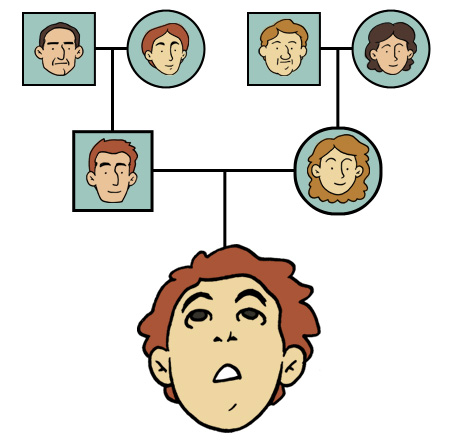
Bipolar disorder is genetic. In fact, the evidence suggests it is the most strongly genetic disorder in the DSM — its genetic component is larger than schizophrenia or autism, which themselves are thought to be very heritable. Accordingly, the best predictor of bipolar disorder is a family history of bipolar disorder. And the more people in your family who have it, the more your risk increases.

Psychiatrists typically always elicit a family history if possible, and a positive family history is very suggestive of a bipolar diagnosis.

Young Adults

Bipolar disorder usually appears early in adult life (although, more rarely, children can have it). Traditionally, the average age of onset is estimated between 20 and 25 years old. Some research now suggests that the actual “age of onset” — the age that symptoms first appear — is actually between 15 and 19 years old, but there is an average delay of 6 years between symptom onset and diagnosis.

I got my symptoms early (around 10 years old) and received my diagnosis at 17. People with an early age of onset tend to have more depression, but not more mania, than people with a later age of onset. They also experience more mood instability, rapid cycling, and on average they have a greater number of suicide attempts.

These differences might appear because, if you compare two people of the same age — one of them with early onset, and one of them with later onset — the early onset individual has had bipolar disorder longer. Another explanation is genetic anticipation; basically, if you have more people in previous generations of your family with bipolar disorder, the genes that cause it accumulate in the later generations. This produces both an earlier age of onset and more severe symptoms.

People with Depression

It may seem intuitive, since depression is part of bipolar disorder, but many people have depression before they have mania (a little over 50%). In that case, at first it may appear that they simply have depression. It can be hard to tell the difference.

There are a few factors that tip the scales in the favor of bipolar disorder, though: a family history; a tendency to oversleep when depressed; depression that occurs in recurring bouts. Also, many bipolar people experience mania or rapid cycling as a response to antidepressant medications (such as SSRIs). For some, this is the first clue that they have underlying bipolar disorder.